Some are essential for the site to work. Others help us measure our audience and the effectiveness of our ads, and will only be set if you accept them. You can change your choice at any time. privacy policy · cookie policy.
Secrets of Efficient Reading · an online course
Efficient reading: keep your mind on the page, and know what you’ve read
There is one movement your eyes cannot make well on their own, and your hand gets it right first time without thinking. The whole course starts there.
The human eye is not built to sweep along a line of text. It is built to follow something that moves.
People tend to blame their reading pace on concentration, on their level, or on a lack of time. The course starts from a more down-to-earth observation, one you can check in thirty seconds.
Two things decide it, and both can be learned. The first is the movement: what your eyes do while you read, and what you can ask them to do instead. The second is what happens before you open the book: what you are looking for, how much time you give yourself, and what else is on your mind.
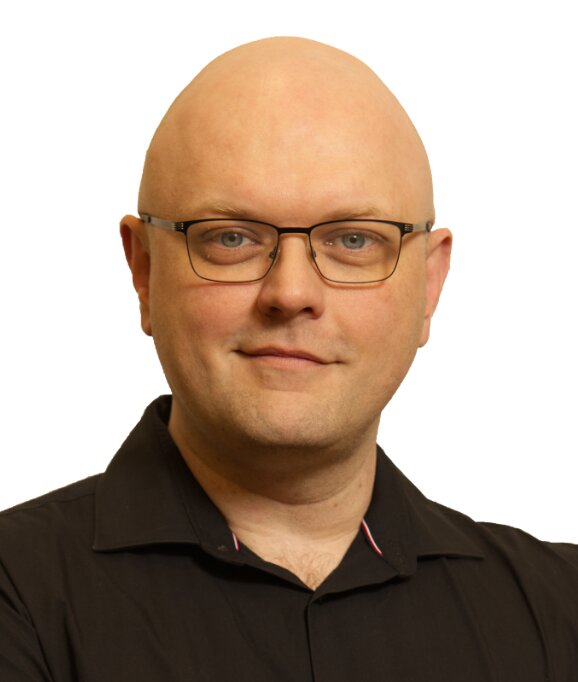
Michel Wozniak, who built this course, did not start from a gift. He read very little, several reading methods did nothing for him, and what finally worked was none of them in particular: it was an order of work. That order is the one this course follows.
What you will be able to do
Measure your reading speed in a way that takes account of what you understood.
Prepare a reading session so that your attention lasts to the end.
Guide your eyes so that they follow the line instead of searching for it.
Step up your pace gradually, giving your comprehension time to catch up.
Let your inner voice go along with your reading, instead of fighting it.
Set your pace by the text: brisk to inform yourself, slow when a novel calls for it.
Carry on alone, with a practice plan that fits into your everyday reading.
What follows is taken from the course, and it takes two people. You need someone facing you, about two metres away, and a minute of their time.
1
Ask this person to imagine a circle one metre across in front of them, and to follow it slowly with their eyes, all the way round. Watch their eyes.
2
You won’t see a circle. You’ll see jumps, restarts and straight segments, and yet they will feel they have traced a perfect circle.
3
Now trace the circle yourself in the air with your finger, and ask them to follow it with their eyes. Speed up, slow down, change direction. The circle is perfect every time.
what the eyes do on their ownwhat they do behind a finger
You have just seen the difference between a movement the eye has to generate and a movement it only has to follow.
The second is what the eye has always been built for: an animal follows its prey, and our wiring has not changed. The first is exactly what you ask of your eyes when you read with nothing to follow, line after line, page after page, for hours.
What the course teaches lies in that difference: handing to your hand a job it knows how to do and your eye does not, then practising it, step by step, on what you read every day.
Watch someone who is really reading. You will see the same thing as with the circle: jumps, and returns, as if to check a word already read. They will notice none of it, and will believe they read in a straight line.
A child learning to read puts a finger under the words. Nobody shows them how, and sooner or later an adult tells them to stop, that it’s for babies.
The reflex comes back intact as soon as reading gets hard: hand anyone a large table of figures and watch their finger.
It is for the same reason that a spreadsheet shades every other row: so that the eye does not jump from one line to the next without noticing.
And for centuries, readers of the Torah have followed the text with a pointer held in the hand.
What Michel sees in his participants once the guide is in place: the eyes stop searching for the line, and the reading settles. Not always on the first attempt: a new movement feels slower before it feels natural.
What a reading speed really means
There is a way of measuring reading speed that means nothing, and one that means something. The first counts words. The second counts them too, then multiplies them by what you actually understood.
words read per minute×the share of what you understood=effective speed
At the World Speed Reading Championships, competitors are handed a novel that has not yet been published, so nobody can have read it. They read it, their speed is recorded, and then they answer a questionnaire with open questions: no boxes to tick, where you have a fair chance of guessing right. The percentage of correct answers multiplies the speed. That is what is called effective speed, and it is the only one that counts.
It settles the question of the videos in which someone turns a page a second and announces ten thousand words a minute. Without the comprehension rate, a speed says nothing. And if such speeds held up with the comprehension to match, someone in twenty years would have gone to the world championships to prove it.
1,348
words per minute of effective speed: the figure Anne Jones set at the world championships, which she won
On 21 July 2007, when the last Harry Potter came out, she bought the book at midnight and read it in 47 minutes. That is a raw speed, not an effective one; what shows she understood it is the review she then wrote for Sky News.
637
words per minute: the world record for speed of speech, held by Steve Woodmore
Along the way, the course goes against a widespread piece of advice: silencing the little inner voice that pronounces the text as you read. Slowed down, every syllable Steve Woodmore says can be heard distinctly. What limits him is mechanical: mouth, tongue, vocal cords. Your inner voice has none of these to move. So rather than trying to suppress it, you learn to let it keep up.
Take a moment. It’s Sunday evening, and the report for tomorrow’s meeting is on the table. You know what you are looking for in it, you’ve given yourself a time, and your phone is in another room. Your hand leads, and your eyes follow it without searching. The pages turn, and the argument builds in your head as you go.
You close the file. You could say in three sentences what it says, where it is weak, and what you think of it.
How do you walk into that meeting tomorrow?
Before you open the book
A Sunday jogger sets off when they feel ready. A professional runner warms up, gets ready, and decides what they have come to do. The difference between the two is not decided during the race, and reading works the same way.
The course gives a whole chapter to what happens before the first page: what you are looking for, the time you allow yourself, what distracts you without your noticing, and what is on your mind.
64 seconds
to get back to work at the same pace after a single email notification, according to a study by Thomas Jackson at Loughborough University (2003)
Distractions are never where you look for them. One participant who could not concentrate had done everything right: phone on flight mode, door closed, a room of her own. Her cat was wandering round her, and she stroked it every two minutes without even noticing. With the cat outside, everything changed. A window onto the street has exactly the same effect: peripheral vision is built to detect movement, and it does its job even when you would rather it didn’t.
What the course contains
The entries below follow the chapters one by one, and none is left out.
The foundations: what is decided before the first page7 chapters
What the course covers, and how it unfolds
The trainer’s own story, and the methods that did nothing for him
What reading more efficiently is for, at work and at home
Pace or efficiency: learning to adjust how you read
The four keys: technique, attitude, motivation and practice
Getting clear about your own motivations, and what they decide
The 80/20 rule, and progress in steps
Measuring your speed, and understanding what you measure7 chapters
Raw speed, effective speed, and the difference between them
How the World Speed Reading Championships measure a reader
Calculating your own speed, and measuring it again as you practise
Benchmarks, from the everyday reader to people who read for a living
What to make of so-called photographic reading
Two scrambled texts, and what they show about the brain
Why attention drifts when reading is too slow
Preparation, the eyes, and the movement10 chapters
What is decided before you open a book
Distractions: the ones you see and the ones you don’t
Heart coherence as a way to get ready to read
Keeping the eyes still, and what a word-by-word reading tool reveals
Subvocalisation: should you silence it?
What the world record for speed of speech says about reading
Watching a reader’s eye movements
The circle followed by the eyes, and the circle traced with a finger
Reading with a guide: practice first, then reading
Your action plan, and what lies beyond this course
Michel Wozniak teaches efficient reading, memory techniques and Mind Mapping, and he began by learning them for himself. As a young man he read very little: reading tired him, and he soon gave up. He took several reading courses, and none of them changed anything for him. What finally worked was none of them in particular: it was an order of work, the one this course follows.
In 2016, in Singapore, he won the Bronze Medal at the World Speed Reading Championships. He is Vice President, Grandmaster Instructor and Exclusive Representative for Europe of Tony Buzan International, which also named him International Ambassador Emeritus, and he was accredited as a Speed-Reading Trainer by ThinkBuzan in 2015. He also holds the Brevet Fédéral de Formateur (Federal Trainer), awarded by the Swiss Confederation.
In their own words
42 testimonials from 28 people.
Allow me to develop my confidence and be more effective
Yassine, 2020
Translated from French
Michel, all my gratitude is still to come. And yet, I already feel a lot of gratitude because I can feel the power of the method. I fully embrace the progressive steps that make you become aware of how things work. I liked it so much that I took lots of notes. And I laughed with pleasure when I felt that it was working! Great!! All that's left is to persevere!
Thank you so much and see you soon for the next world championships!
Christophe MAITRE, Ingénieur curieux, France, 2020
Translated from French
Simple, clear and effective
Rodérick Fodé, 2021
Translated from French
Very good
Frédéric Lacour, 2025
Translated from French
Thanks again. I will recommend your training!
Audrey CORDEAU - Lançon-Provence, 2020
Translated from French
I'm retired so I will mostly use these skills in my personal life.
Sally J, retired., 2023
Translated from French
Good training and excellent trainer.
I was able to develop my ability to read efficiently, and so to read more and more often. I have always loved reading but efficient reading added an extra addictive dimension.
Jody G., 2021
Translated from French
practice daily for a faster and more efficient reading, devour books!
Lili, 2021
Translated from French
I appreciated the figures and concrete data as well as the graphics, color of the mind mapping materials
Suzanne K, 2021
Translated from French
I must admit that the effort put in by Mr Wozniak to produce this top-quality training is enormous. He gives all the tips, without forgetting anything.
In a soft, steady voice, he follows the learner through the execution of their exercises, and this, in a soft, steady voice, while guaranteeing the effectiveness of the results. Well yes, it works very well, since, from 150 words per minute initially, I went up to 250 words by the end of the training and today I do 500 wpm after a 3-month gap. And it's not over yet!!
I very strongly recommend this training, which is an essential tool allowing you, without any doubt, to quickly progress in the art of speed reading.
Thank you Mr Wozniak.
Wariss, 2021
Translated from French
Being able to read more books in less time on more varied subjects
Quentin, 2021
Translated from French
I took the "Secrets of effective reading" training given by Michel Wozniak, very calm and a good teacher, the ideal professor for this learning. It helped me to concentrate and save time when it comes to reading. I recommend it because it can be very useful in many professions or areas of life.
Chrystelle, 2023
Translated from French
Learn new things by reading more. I want to train in project management soon.
Jean-Yves A., 2021
Translated from French
In my private life but also professionally by reading the various documents, sometimes long, more quickly.
Sandra, 2024
Translated from French
It makes me want to go further on the ability to synthesize reading...
Sandrine, 2023
Translated from French
I took the online training of 'Secret of Efficiant Reading. I am still adapting, but it is a very important training for me. My reading skills improved and doublet.
Hagen, coach, The Netherlands, 2022
Translated from French
I took the Efficient Reading training and I'm completely satisfied with it. It gives you several techniques to promote speed reading and memorization. The organization of the training is smooth, as are the explanations. It's interesting to have pedagogical tools and to understand their relevance in terms of how the brain works, which in my opinion maximizes the chances of remembering them. All that's left is to practice and experiment more. Thank you for the quality of your training and see you soon I hope!
Gwendoline, 2021
Translated from French
This will allow me to read more, diversify my reading, understand what I read and memorise it. Reading consciously with all the techniques learned makes a difference compared to my old way of reading. More efficient and more effective. It makes you want to read more, without barriers, with these techniques, the pleasure is there.
Amel, France, 2021
Translated from French
The courses were very well presented and explained.
Morgane, 2018
Translated from French
I found it very interesting and well laid out, which allowed me to follow it even though it required quite strong concentration from me
Stéphanie P., 2020
Translated from French
I experienced the course with passion
Patrice Spin Doctor en Nutrition & Neurosciences, 2021
Translated from French
I find Michel Wozniak quite relaxed when he gives his training. I find him quite relaxed, quite open.
Hadrien, 2021
Translated from French
I appreciated Michel Wozniak's calm and composed tone.
Sabrina, 2023
Translated from French
I want to thank Michel for the work he has done. I am a doctor and dyslexic and ADHD (that gives you an idea of the hours I've had to put in to read a colossal amount of information) thanks to this training, even before the end of the program I was able to significantly increase my reading speed. I can't wait to sign up for the full speed reading training.
thanks again for this fabulous tool which will be of enormous use to me!!!
Dr ouedraogo louis sylvain, 2021
Translated from French
Our learners rate us
46 evaluations, 506 ratings.
9.1
out of 10 – ‘Overall, I am satisfied with the course’, 46 responses
Organisation9.7
Clarity of teaching9.7
Activities and examples9.7
Trainers’ expertise9.7
Objectives achieved9.3
Theory and practice9.3
Useful in my work9.2
Value for money9.0
The studies we take into account
Every day, we follow the research published on what we teach, including when it contradicts us.
55
scientific studies on efficient reading
Figures as of 18 November 2026, updated daily.
Three things to know before you enrol
1
Understanding is not enough: you have to read differently every day
The techniques in this course are easy to understand, and they only help the person who uses them. They don’t ask for extra hours: they ask you to read your newspaper, your work documents and your novels differently, starting tomorrow. If you plan to watch the videos without changing the way you read, you will get little out of them.
2
There is a stage when you understand less, and that is when people give up
When your pace goes up, comprehension drops at first, then comes back once the brain has adjusted. It is true of any new skill (nobody manages the steering wheel and the accelerator together on the first try), and it is the very moment when most people decide the method doesn’t work. Better to tell you before than after.
3
The course covers what pays off most, not the whole subject
The course applies the 80/20 rule, and says so in the first video: it keeps the small number of techniques that bring most of the result. Peripheral reading, advanced uses of the guide and reading in groups of words are not covered here. Nor is it a ‘photographic reading’ method: the course explains why it does not believe in one, and works on conscious reading, the kind in which you read everything.
When I enrol, I receive
The course videosFilmed in English, in three parts: the foundations, measuring, then the movement.
Access with no time limitYou follow the course at your own pace, and come back to it whenever you like, as often as you like. The last video invites you to do exactly that.
Access from the GoKollab appOn a computer or a phone, so you can pick up a chapter where you left off.
A certificate of completionIt confirms that you have followed the course. It is not a qualification, and this page does not present it as one.
The price
The payment options shown are the ones that apply on the day you enrol.
Billing is in Swiss francs or euros. Amounts shown in other currencies are indicative, at the latest known exchange rate.
A refund is possible during the first month, provided you have opened no more than 10% of the videos, since the whole course is available from the day you enrol. Just write to us using the contact form.
You complete your order on our order page, and your access opens straight away.
Frequently asked questions
Do I need any prior knowledge?
None. The course starts from your current pace, whatever it is, and the first practical step is to measure it.
What language is the course in?
English. It was filmed in English from start to finish, chapter by chapter, by Michel Wozniak.
Do I need any materials?
A book you have not read yet, ideally a paperback; something to write with; and a pen or a slim stick to use as a guide. One practical step is done in a web browser with a free tool. Two others need another person for ten minutes, to watch your eyes and theirs.
How long do I have access to the course?
With no time limit. You follow it at your own pace, and come back to it whenever you like, as often as you like.
How do I follow it?
Online, on the GoKollab platform, at whatever time suits you. There is a mobile app if you would rather follow the chapters on your phone.
Do I receive a document at the end?
Yes, a certificate of completion.
How do I pay?
According to the options in the price table higher up this page: those are the ones that apply when you enrol.