Some are essential for the site to work. Others help us measure our audience and the effectiveness of our ads, and will only be set if you accept them. You can change your choice at any time. privacy policy · cookie policy.
Filmed at the Maison des Océans, Paris, on 11 August 2018
Tony Buzan’s last two lectures in Paris: Mind Mapping and Speed Reading
What your memory does with a single word, what your eyes really do when you read, and the way of taking notes that follows from both. Tony Buzan has the audience find it out for themselves, experiment after experiment, and you can do the same at home.
people in the room, doing the experiments with him
34 sequences
in the contents, in the order of the day
What these lectures give you
Why people watch them, and what they take away.
1Notes you rarely read again
In meetings, in class, while reading, you take notes, and you go back to them less often than you would like.
You see what Tony Buzan holds against notes written in lines and in a single colour, and he builds the alternative in front of the audience.
Lecture 1 · Mind Mapping
2Lots read, little kept
Books, reports, articles, and the feeling a few weeks later that little of it has stayed.
Tony Buzan redefines reading in seven stages, of which school teaches little more than the first, and shows what the mind map does to help you keep and find again what you have read.
Lecture 2 · Speed Reading
3Reading the way you learned as a child
You learn to read once, at school, and nobody ever comes back to how you do it.
You see what your eyes actually do on a line, and where your reading speed is really decided.
Lecture 2 · Speed Reading
4You already use mind maps
You have been drawing them for years, or you introduce them to others.
You hear them explained by the man who created them, to a room of practitioners whom he shows what they had not noticed.
Lecture 1 · Mind Mapping
5The author himself, not a summary
You would rather take ideas from the person who had them, in his own words.
These recordings give you Tony Buzan as he spoke in the room, with nothing in between.
In his own voice
6Finding out whether the approach suits you
You are hesitating before committing to a full course without knowing whether these two tools speak to you.
You see how Tony Buzan thought about his two tools, and you do most of the audience’s experiments yourself.
On 11 August 2018, he begins by asking the room who they are. How many scientists? Three or four hands. How many artists? Barely more. How many poets? Hardly anyone. How many know what a mind map is? Every hand goes up, and no wonder: these are the French championships, and the room is full of people who have been drawing them for years.
Then he walks along the rows while everyone takes notes, and looks at what is being written. Almost every page is in a single colour. He goes back on stage and spends the next two hours having the audience see for themselves, exercise after exercise, that these four hundred people think in images, colours and associations, and that they have just written the opposite in their notebooks.
At the end of the morning, he asks the first question again. How many scientists? Every hand goes up. That is the shape of the day, and it is why these lectures are still worth watching: he puts forward nothing he has not first had the room check for itself.
You can do this one alone, with nothing to hand, and it is taken straight from the lecture. Read the three lines, then try it before reading on.
1Close your eyes and give yourself one word: ‘monkey’. Nothing else. Let whatever comes come, for about ten seconds.
2Open your eyes and answer three questions. How long did it take? What did you get, letters or an image? Was there colour, and was it moving?
3Finally, look at what came with it without your asking: a tree, a branch, perhaps a banana, a second monkey.
You did not get M, O, N, K, E, Y.
You got an image, in colour, moving, and already linked to three others.
Buzan then asks the room the next question: how much information is there in a human memory? A lot, everyone answers. You have just pulled out one item, precisely, instantly, without knowing how. He doesn’t know how either, and says so.
What he draws from it can be checked on the table next to you. If memory gives back images, colours, associations and movement, a note that has none of these is speaking to it in a language that is not its own. The mind map follows from that, and he rebuilds it in front of the room, branch by branch, from what the audience has just answered.
In the afternoon he takes the same approach to reading. First he asks the room to show, with a finger in the air, how the eyes travel along a line. Four hundred fingers glide smoothly from left to right. Not one is right.
What the eyes really do, the audience discovers two minutes later, in pairs, with an ordinary book, and what they see looks nothing like what the fingers were drawing.
The rest of the hour starts from there: where reading speed is really decided, what Tony Buzan thinks of the instruction to read ‘slowly and carefully’, and how far peripheral vision reaches, which the room measures in a second experiment in pairs.
The order is not decorative. The Mind Mapping lecture ends with a twenty-minute break, and Buzan announces what comes next himself: now, we are going to read.
His definition of reading has seven stages, and he draws it as a mind map in front of the room. He points out that school teaches little more than the first, and that nobody ever showed him the other six.
1
2
3
4
5
6
7
what school teachesthe morning’s tool
The tool he offers for stages three to six is the one from the morning. That is why the two lectures follow each other, and why the second builds on the first without ever repeating it.
Picture your next meeting
Take a moment. Your next meeting is about to start, and in front of you there is a single sheet. In the centre, an image. Around it, a few curved branches in different colours, a word on each.
A week later, someone asks what was decided. You open your notebook at that page, and the meeting comes back to you at a glance: who said what, what was left open, what you promised to do.
What would you do with notes you actually want to read again?
What the two lectures contain
Here is the sequence of both lectures, in the order in which they unfold. Nothing has been taken out: what Buzan puts forward and this page does not repeat is still there, under the name of the sequence in which he says it.
Lecture 1 – Mind MappingIn the morning15 sequences
Who is in the room: six questions and a show of hands
Introducing yourself to twenty thousand people: the note-taking exercise
Metacognition, or thinking about the way you think
A single colour: what the audience had brought with them
The monkey test: what the brain gives back when you throw it a word
Images, colour, association, movement: what Tony Buzan calls the human language
What the audience would prescribe for children taking notes
The laws of the mind map, and why the hand rather than the keyboard
A baby’s first mind map
The baby who tests hypotheses
The two sides of the cortex, after the work of Sperry and Ornstein
The audience’s test: which side do music, art, business and creativity sit on
Synergetic thinking, and the conversation between the two sides
Leonardo da Vinci’s notebooks, and what Tony Buzan’s teacher said about them
Daydreaming: the kind that idles, and the kind people train
Lecture 2 – Speed ReadingAfter a twenty-minute break19 sequences
Tony Buzan at twelve: a reading test, a result, and a teacher who says no
Measuring your own reading speed at home, with an ordinary book
Writing your own definition of reading, then comparing it with your neighbour’s
The seven branches of reading, as a mind map
Recognition: phonics, whole-word reading, and what we were taught
Assimilation: posture, breathing and comfort while reading
Comprehension, and what Tony Buzan means by it
Connecting books to one another
What remains of a degree
Retention and recall
Communicating, applying, creating: what reading is for
The eye experiment, in pairs
What the audience sees in their neighbour’s eyes
Going back, drifting off, losing the line
Where reading speed is really decided
‘Slowly and carefully’: the demonstration out loud
The peripheral vision experiment, in pairs
The guide, and why the brain follows it
Reading a face, an animal, the sky: how the definition widens
Two filmed lectures, given on the same day, 11 August 2018, in front of four hundred people at the Maison des Océans in Paris. They took place during the French Mind Mapping and Speed Reading Championships, organised by APAC, an association Michel Wozniak co-founded; he was in the interpreting booth that day.
Tony Buzan with a headset microphone, facing the audience at the Maison des Océans, Paris, on 11 August 2018.
The audience works throughout: in pairs, in fours, with a show of hands, out loud. You hear the votes, the laughter, the rows talking among themselves, and Buzan asking for quiet again. The exercises last from thirty seconds to five minutes, and you can do them along with the room or let them pass.
Two of them need another person for two minutes; all the others you can do alone.
You will also hear Buzan improvise. He announces a plan and rarely sticks to it, he goes back over things, he tells the story of the twelve-year-old boy whose teacher said his reading speed was the one he was born with and would never change. It is a lecture, lively and rambling as lectures are.
Who is speaking
Tony Buzan
on stage
Tony Buzan created the mind map and made it known around the world. He co-founded the World Memory Championships in 1991 with Raymond Keene, followed by the championships in speed reading and in Mind Mapping. In 2016, Toastmasters International gave him its Golden Gavel, awarded every year since 1959 to someone who has made a difference in communication. He was born on 2 June 1942 and died on 13 April 2019, eight months after these two lectures.
Michel Wozniak
in the interpreting booth
Michel Wozniak was interpreting live into French from the booth; this English recording is Tony Buzan’s own voice. He is Vice President, Grandmaster Instructor and Exclusive Representative for Europe of Tony Buzan International, which also named him International Ambassador Emeritus, and Vice President of The Brain Trust Charity, the NGO founded by Tony Buzan. In 2016, in Singapore, he won the Bronze Medal at the World Speed Reading Championships.
Three things to know before you enrol
1
These are lectures, and nothing in them is marked
You are watching someone speak to a room. There is no exercise to hand in, no handout to download, no quiz, and nobody to read your work. What you get from these recordings depends entirely on what you do with a pencil beside you.
2
It is a recording of a live event, filmed in 2018
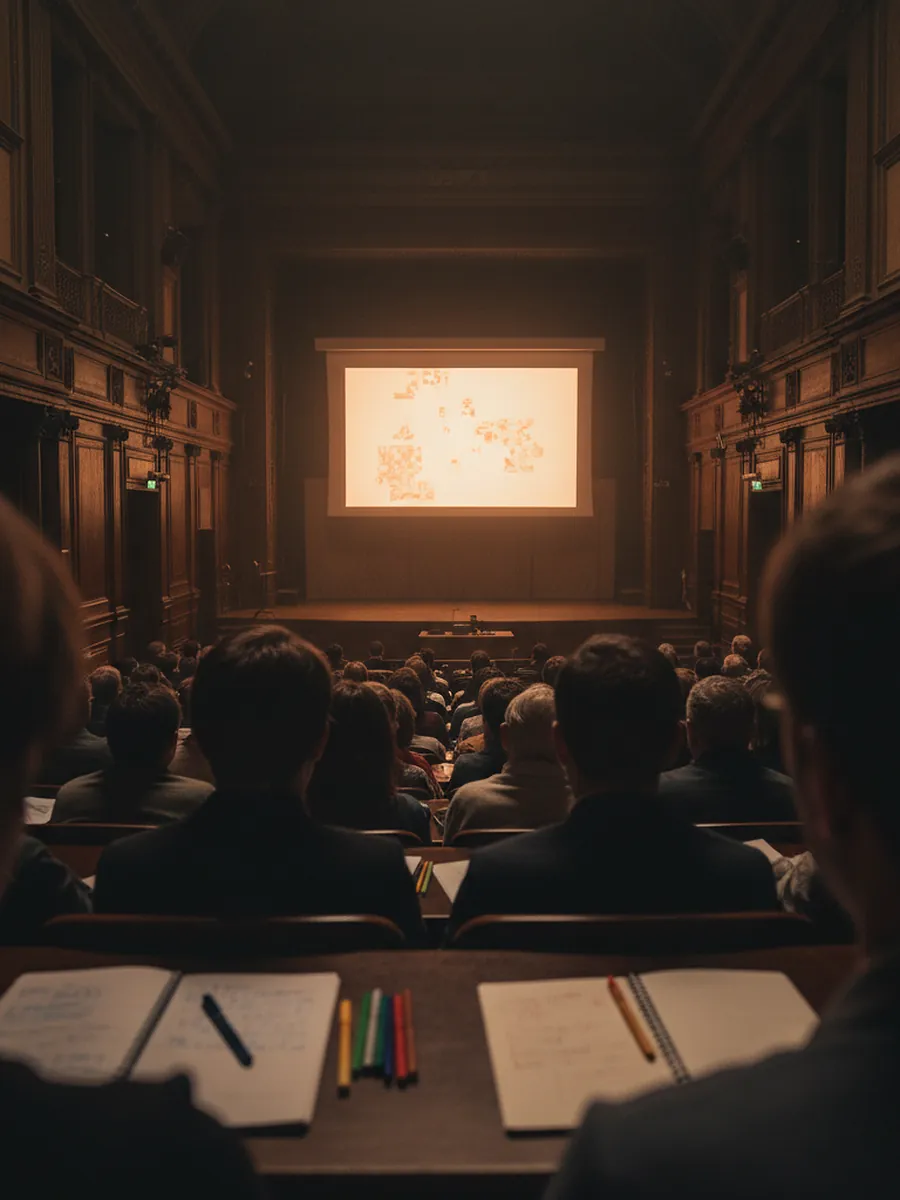
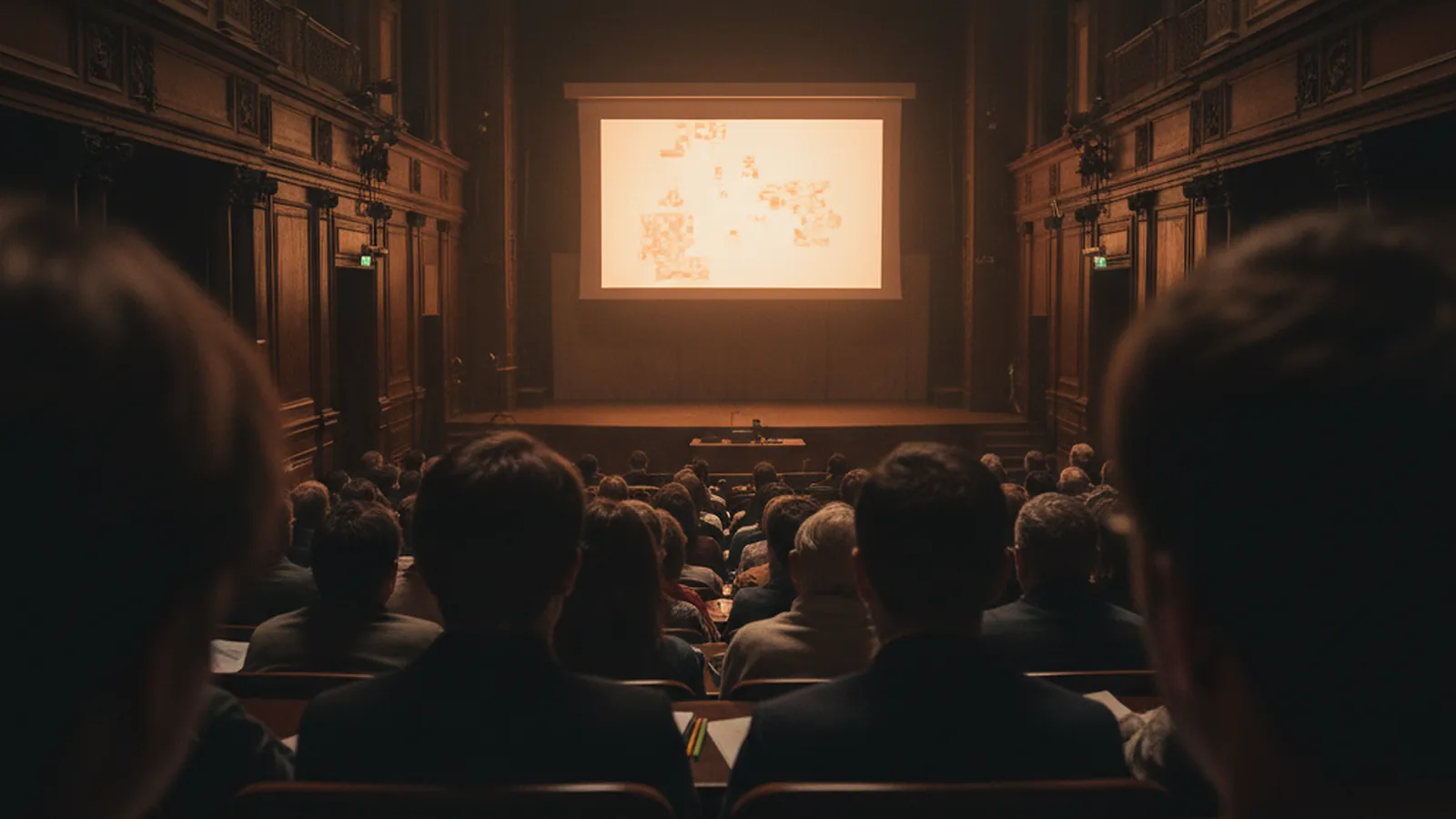
The sound is that of a stage microphone in a lecture hall, with the noise of a room of four hundred people. The picture shows the projection screen and the speaker, not the audience’s notebooks: what is projected can be read, the neighbours’ notes cannot.
3
There is no set plan, and he improvises
He announces one thing, does another, comes back to it, digresses, and asks the room again what it has just found. That is what makes these hours lively, and also what makes them rambling. If you are looking for a course built from the first module to the last, these two lectures are not that.
When I enrol, I receive
Both lecturesIn full, as they were filmed in the room, in Tony Buzan’s own voice.
Access with no time limitYou watch them at your own pace, and come back to them whenever you like, as often as you like.
Access from the GoKollab appOn a computer or a phone, so you can pick up a lecture where you left off.
The price
The payment options shown are the ones that apply on the day you enrol.
Billing is in Swiss francs or euros. Amounts shown in other currencies are indicative, at the latest known exchange rate.
A refund is possible during the first month, provided you have opened no more than 10% of the videos, since the whole course is available from the day you enrol. Just write to us using the contact form.
You complete your order on our order page, and your access opens straight away.
Frequently asked questions
Do I need to know about Mind Mapping or speed reading already?
No, nothing is assumed. The audience, on the other hand, was made up of people who had been practising for years, and Tony Buzan spends the first hour showing them what they had not noticed: someone new to the subject is not behind them.
What language are the lectures in?
English. You hear Tony Buzan exactly as he spoke in the room that day.
Do I need any materials?
Something to write with, and at least three colours: the first lecture will have you drawing. A book you have not read yet, for the second. And two of the experiments need another person for two minutes.
How long do I have access to the lectures?
With no time limit. You watch them at your own pace, and come back to them whenever you like, as often as you like.
How do I watch them?
Online, on the GoKollab platform, at whatever time suits you. There is a mobile app if you would rather watch on your phone.
Do I receive a document at the end?
These are lectures, and there is no certificate at the end: what you keep is what you have written down. It is also the one instruction Tony Buzan repeats throughout, and he gives a reason for it.
How do I pay?
According to the options shown in the price table higher up the page: those are the ones that apply. You pay when you enrol, in Swiss francs or euros.