Leadership in the age of AI: alignment, humanity and impact

Published November 18, 2026 · 7 min read
In brief
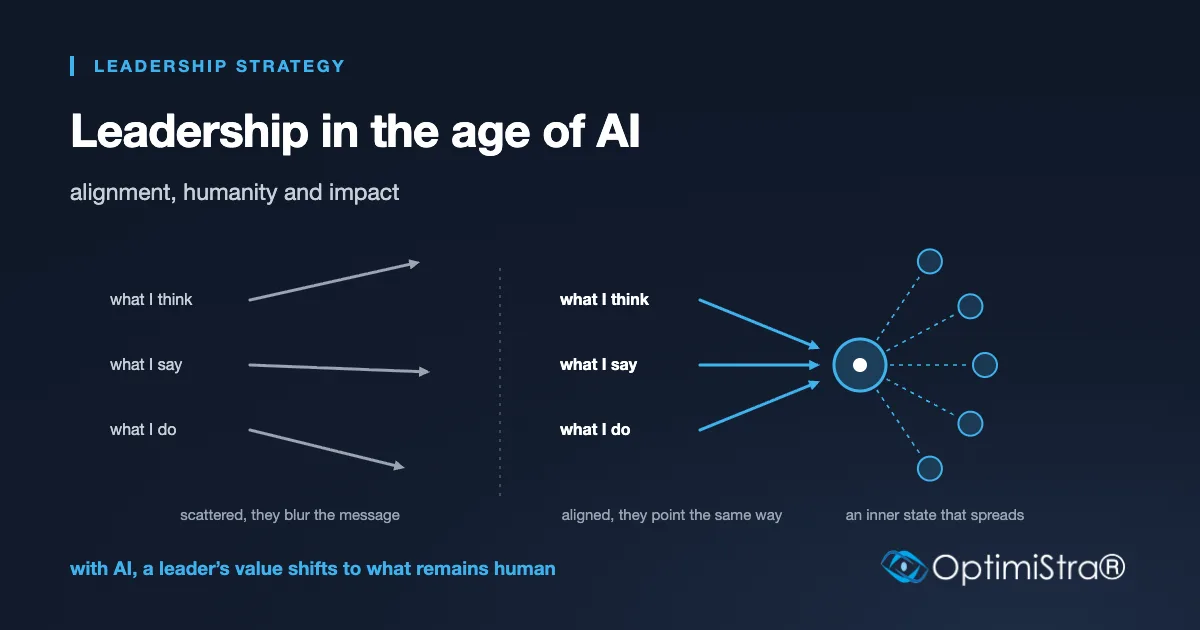
As AI becomes faster and more consistent at technical work, a leader’s value moves toward what stays human: coherence between thoughts, words and actions, the quality of connection and the ability to bring out other people’s potential. This inner alignment is not improvised. It is worked on and kept up over time.
Leadership in the age of AI: a challenge for the human leader
The professional landscape of leadership is being profoundly reshaped by the arrival of artificial intelligence (AI). As recently as 10 or 15 years ago, mediocrity could go unnoticed: someone with little commitment and little to inspire others could keep their job for a whole career. That time is over.

Companies now have to focus on the real value of each member of staff, on each person’s ability to add something human. AI, with its superior technical skills, has ended the illusion that an average position is enough. It sets us an unprecedented challenge: to become better leaders, no longer through technical expertise alone, but through the quality of our humanity, our inner alignment and our genuine presence.
Current trends make the need plainer still. Some companies are making large-scale redundancies, sometimes up to 50% of their staff, replaced by ever more capable AI (one example among many, in French). In some cases, in the United States for example, it is middle management that is being replaced by algorithms that are more reliable, more predictable and even more “empathetic” than poorly aligned humans (see what Forbes says about it). Every leader therefore has to ask: what do I really bring that a machine does not? The answer lies in the ability to create a real connection, to inspire and to lift others. For that, you first have to be aligned yourself, at ease in your head and in your life.
The status quo is no longer an option. So what part is played by language, by inner states and by the neuro-cognitive phenomena that strengthen or destroy our leadership?
Mirror neurons and the Pygmalion effect: when our inner states shape our impact

Human leadership cannot be reduced to technical skills or management procedures. It rests on a subtle chemistry in which language, emotions, beliefs and behavior are woven together. Mirror neurons, for example, play a crucial role: our inner states (stress, calm, joy, frustration) are constantly picked up by other people. If a leader is out of alignment inside, stressed or bitter, that tension passes to the team without anyone being aware of it. A leader who is at peace with themselves, confident and aligned in values and actions spreads a positive energy that naturally raises the quality and performance of the people around them. This may seem a long way from the traditional view of leadership, and yet it is the new reality. Sy, Côté and Saavedra measured it: a leader’s mood rubs off on the mood of the group, and it changes even the group’s coordination and the effort it puts in.
On top of these biological phenomena come the Rosenthal effect (or Pygmalion effect) and the Golem effect: sincerely believing that a colleague can reach excellence raises their chances of getting there. Conversely, treating someone as incompetent locks them into that mediocrity. Kierein and Gold pooled 13 measurements of this effect in work organizations, and the size of the effect they found is far from trivial. Language is therefore a tool of mass construction or of mass destruction. Intrapersonal communication (how I talk to myself) and interpersonal communication (how I speak to others) shape the emotional climate of the team. Here again an AI, which has no negative emotions, can turn out to be less toxic than a poorly aligned human.

A human being who is aligned, and aware of the effect of their words and beliefs, has a considerable advantage over the machine. They can go beyond logical processes through real human connection, turning a group of people into genuine human capital (as opposed to the dated, traditional idea of a human resource), where everyone feels valued, encouraged and recognized. Only this approach can give people a sense of vocation and avoid the attrition so typical of the younger generations, who are looking for meaning. Hence the importance of working not only on your language and your communication techniques but also, and above all, on your own inner state. This return to the human shows up in every aspect of preparing for our future (see an article I wrote for Les Futurs, in French, as part of a study for armasuisse, Swiss Defence). Let us look more closely at the idea of overall alignment, which is essential to leadership that lasts and inspires.
Personal alignment: the key to leadership that really sets you apart
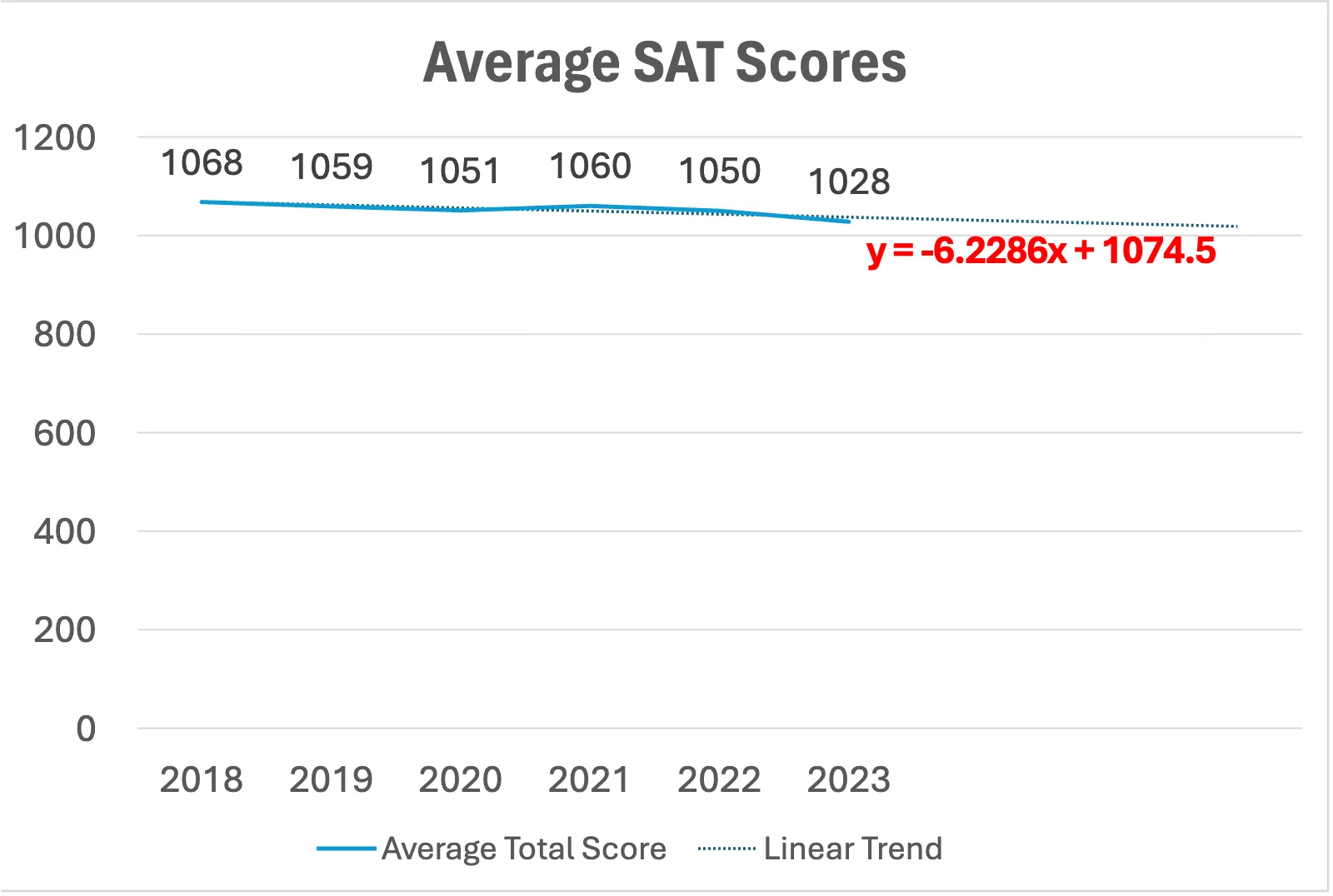
AI is increasingly good at technical tasks. In the same world, the level of human intelligence seems to be declining, as suggested by a fall of more than 6 points a year in average scores on the SAT, the test used for university entrance in the United States. Leaders therefore have to rethink the value they add. Purely technical skills are no longer enough: AI is faster, more precise and more consistent. What will distinguish a human being is the ability to bring people together around a vision, to inspire trust, to build cohesion and to help individuals flourish.
Personal alignment, this coherence between thoughts, words and actions, then becomes the key. An aligned leader fully embodies their values and can draw on their inner resources so that it carries to the whole team. This alignment is not improvised: it is worked on, kept up and refined. Disciplines such as the Techniques d’Optimisation du Potentiel (TOP, potential optimization techniques), developed and used by the armed forces and largely inspired by strategic communication approaches, offer powerful tools to, among other things, refine your inner dialogue, develop your multi-sensory representations, deepen your mental imagery, improve your breathing, cultivate congruent interpersonal communication and anchor authentic leadership.
If, as a leader, you master this alignment, you give your company or organization human capital of inestimable value, beyond what the most sophisticated AI can offer. You can guide your team toward more performance, commitment, harmony and growth. This is the approach we develop and teach, with the validation of 14 experts, among them doctors in neuroscience, biology and biophysics, psychologists and psychoanalysts. It gives you a distinctive perspective from which to take your leadership further.
Become the aligned leader the world needs
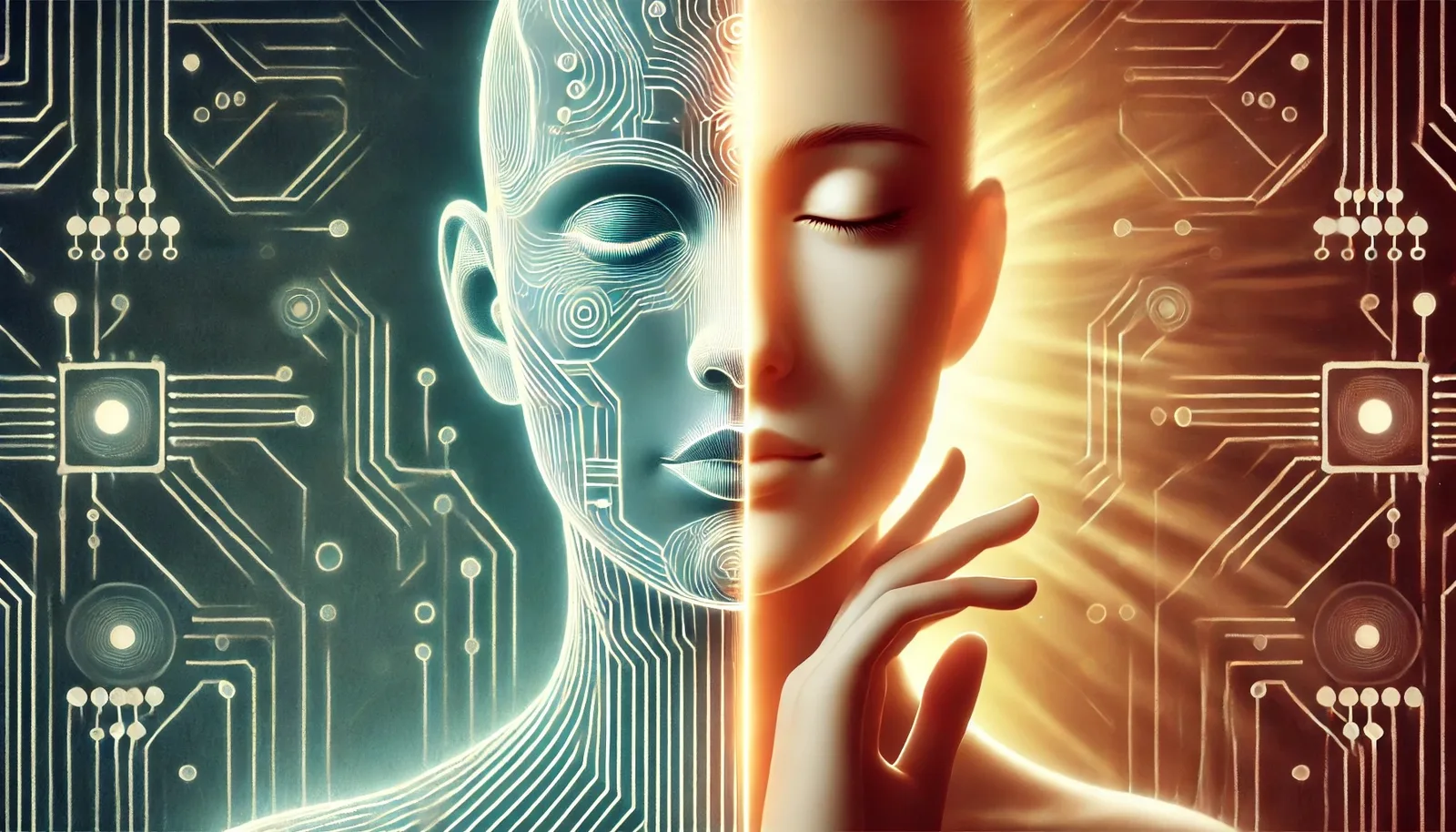
The world now needs leaders who can express their humanity in full, bring out the potential of others and steer language and thought in a constructive direction. Neither standing still nor mediocrity is possible or acceptable any longer. The choice is not simply between a human manager and an AI. It is between an authentic, aligned leader and a technology that remains entirely impersonal. It is no longer a matter of pretending, but of becoming.
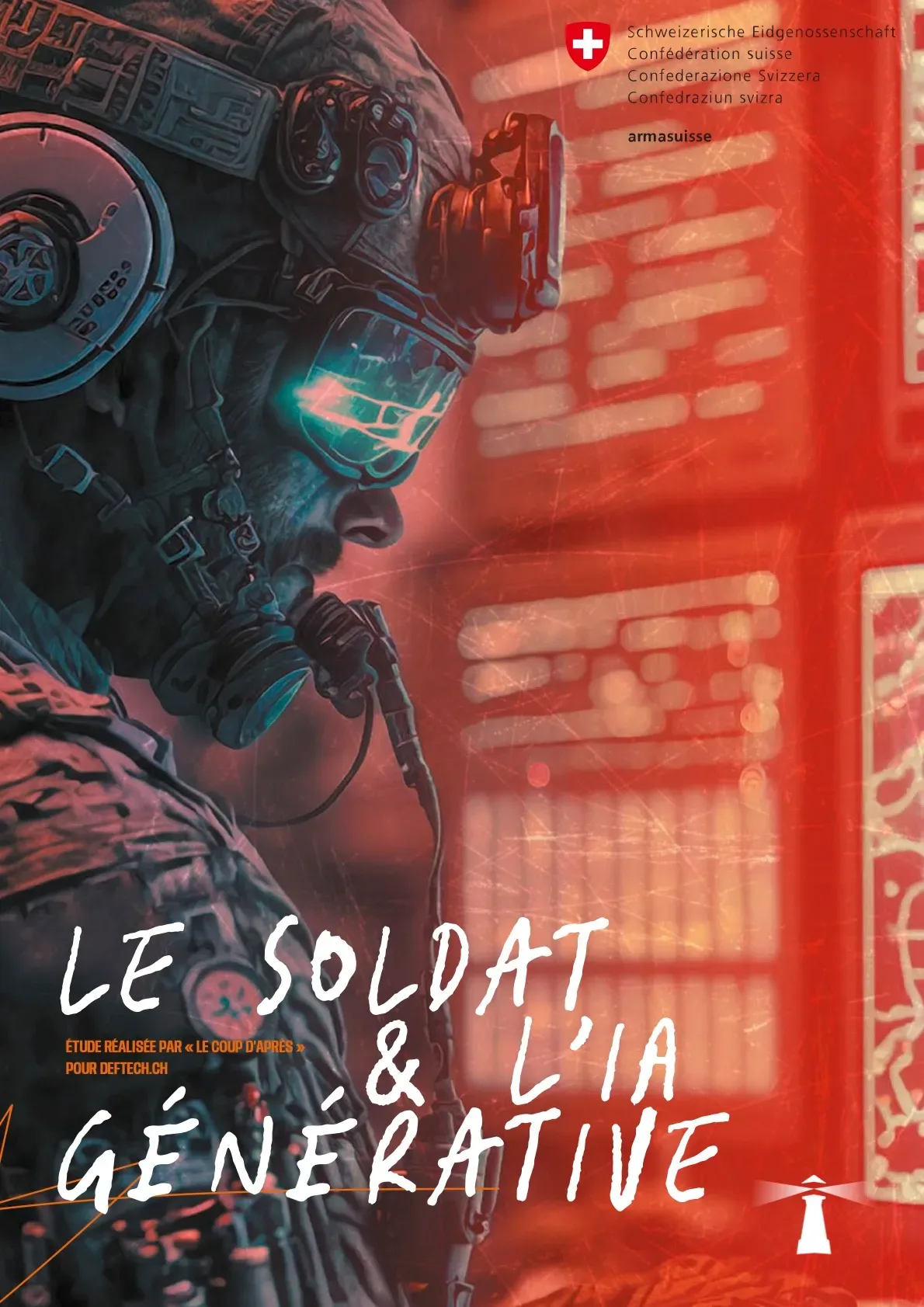
These questions are far more than philosophical. AI is shaping our whole society, and it goes well beyond ChatGPT. Private life, work, education and even the military are all widely affected by it.
Having had the honor of being consulted as an expert for a piece of work for Swiss Defence on the soldier and generative AI (document in French), I can see no layer of society that is left untouched. AI reveals and stimulates: it obliges us to ask ourselves the right questions.
If you would like to go further, develop your leadership, bring this humanist view of management into your work and strengthen your inner alignment, book a diagnostic call. Our courses can help you sharpen your relational, emotional and strategic intelligence. A call or a message is enough to start, and to discover another way of practicing leadership that is lasting, profitable and deeply human.
Get in touch to find out more, talk it through with us and choose to become the aligned leader who will make a difference in tomorrow’s world.
Further reading
- The team that supports leaders on these questions.
- Our Practitioner course in Neuro-Linguistic Programming (NLP) lays the foundations of calibration and reframing.
Article designed and written by Michel Wozniak, and optimized by artificial intelligence. Illustration created by artificial intelligence.
Frequently asked questions
Why is AI changing what we expect from leaders?
Because it carries out technical tasks faster and more consistently than a human being. An average position, once tolerated, is no longer enough. The question for every leader becomes simple: what do they bring that a machine does not, in connection, in inspiration and in lifting their team?
What does personal alignment mean for a leader?
It is the coherence between what you think, what you say and what you do. An aligned leader embodies their values and draws on their inner resources. The people around them perceive that coherence, and it directly influences the team’s emotional climate and performance.
What do mirror neurons have to do with management?
Our inner states, whether stress or calm, are constantly picked up by other people. A tense or bitter manager passes that tension to the team without saying a word. A stable inner state, on the other hand, spreads an energy that raises the level of quality around it.
Can an algorithm be less toxic than a human manager?
In some respects, yes. Having no negative emotions, it projects neither bitterness nor belittling judgment. That is precisely why a poorly aligned human becomes replaceable, while a human who is aware of the effect of their words keeps a decisive advantage: real connection.
How can I work on my alignment in practice?
Through regular practice of inner dialogue, multi-sensory representations, mental imagery, breathing and congruence in your relationships. The Techniques d’Optimisation du Potentiel (TOP), used by the armed forces, offer a structured framework for developing these dimensions over time.
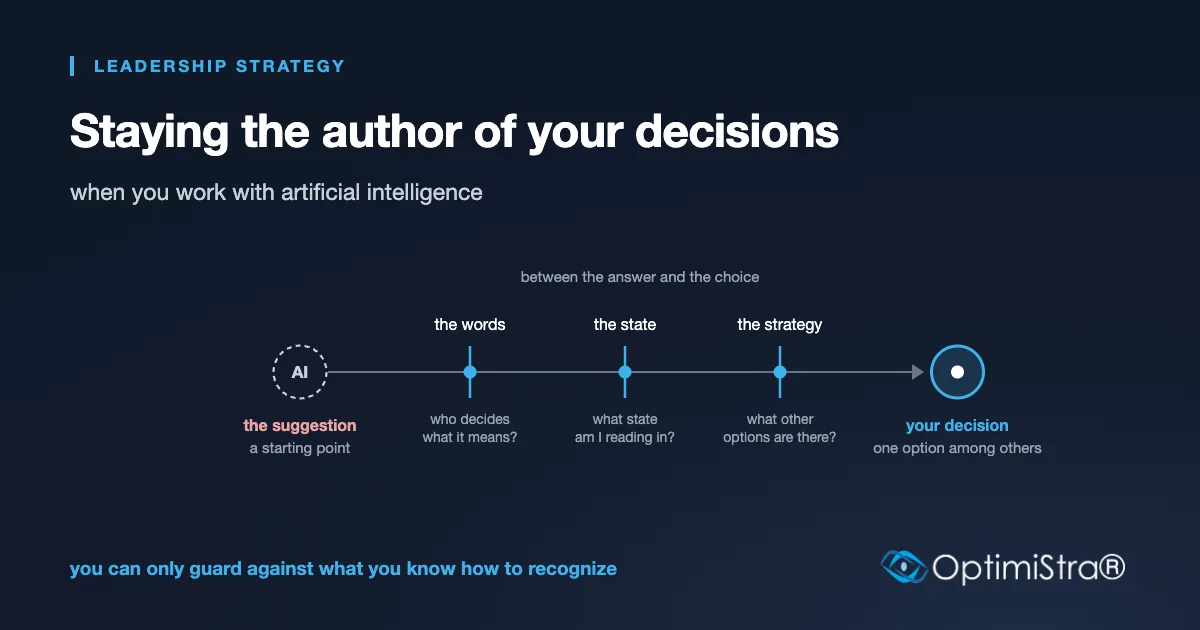
Leadership Strategy
Staying the author of your decisions when you work with AI
A language model can steer a decision with words alone: a suggested figure becomes the starting point, and the way a risk is framed changes the choice that follows. Knowing you can be influenced is not enough to protect you. What does protect you can be trained: precise language, managing your inner state, and strategic thinking.
November 18, 2026 · 14 min read
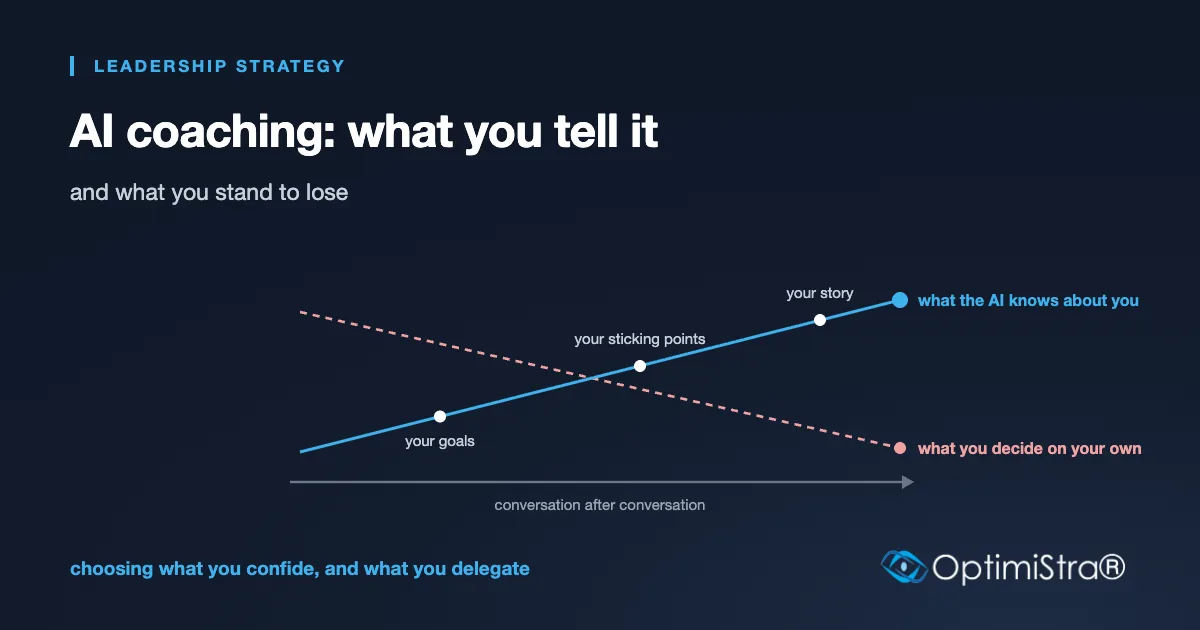
Leadership Strategy
AI coaching: what you tell it, and what you stand to lose
With six pieces of information about you, an artificial intelligence (AI) persuades better than a human, and AI coaching tools invite you to share far more, with no professional confidentiality. Handing your thinking over to them also has a cost, which studies are starting to measure. Human skills are gaining value, and they can be trained.
November 18, 2026 · 16 min read
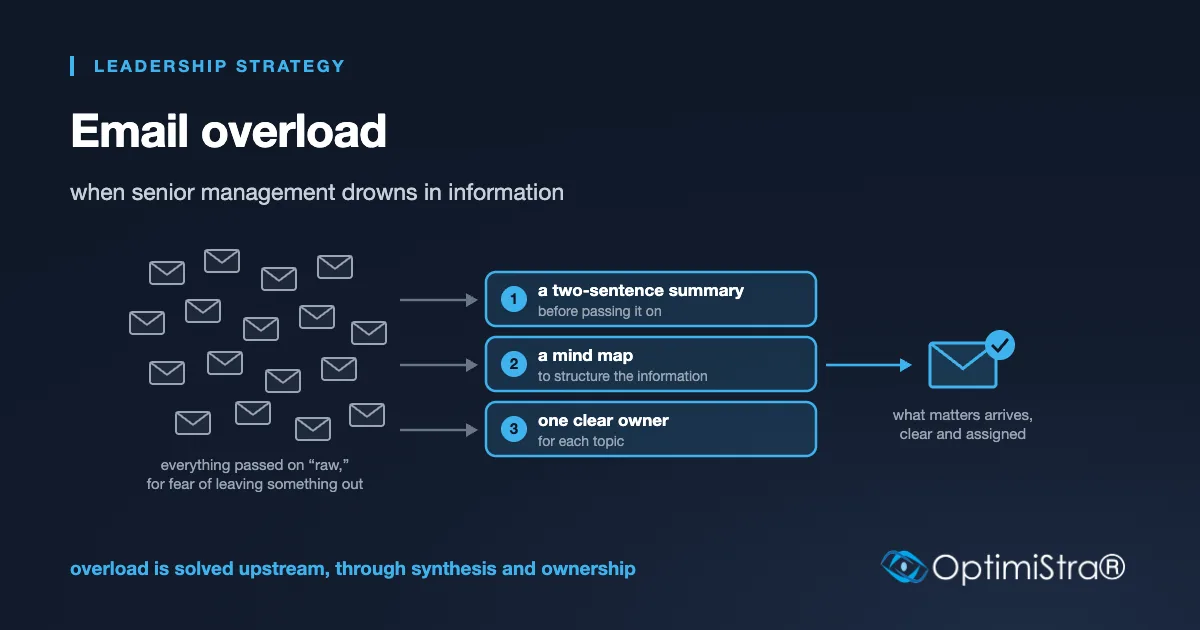
Leadership Strategy
When senior management drowns in email
Email overload comes mostly from the fear of leaving something out: people forward everything raw instead of taking responsibility for a summary. Three things help: ask for a two-sentence summary before anything is forwarded, structure information with mind mapping and make clear who is responsible for what, backed by training and feedback.
November 18, 2026 · 9 min read