Understanding NLP
Before knowing what NLP makes possible, you need to know what it is. These articles answer the questions we are asked most often, in the order they usually come: what NLP is, how it works, what the three words of its name tell you, and the three pillars it rests on.
Read them in order, or on their own.
All articles
4 articles
Understanding NLP
The core principles of NLP
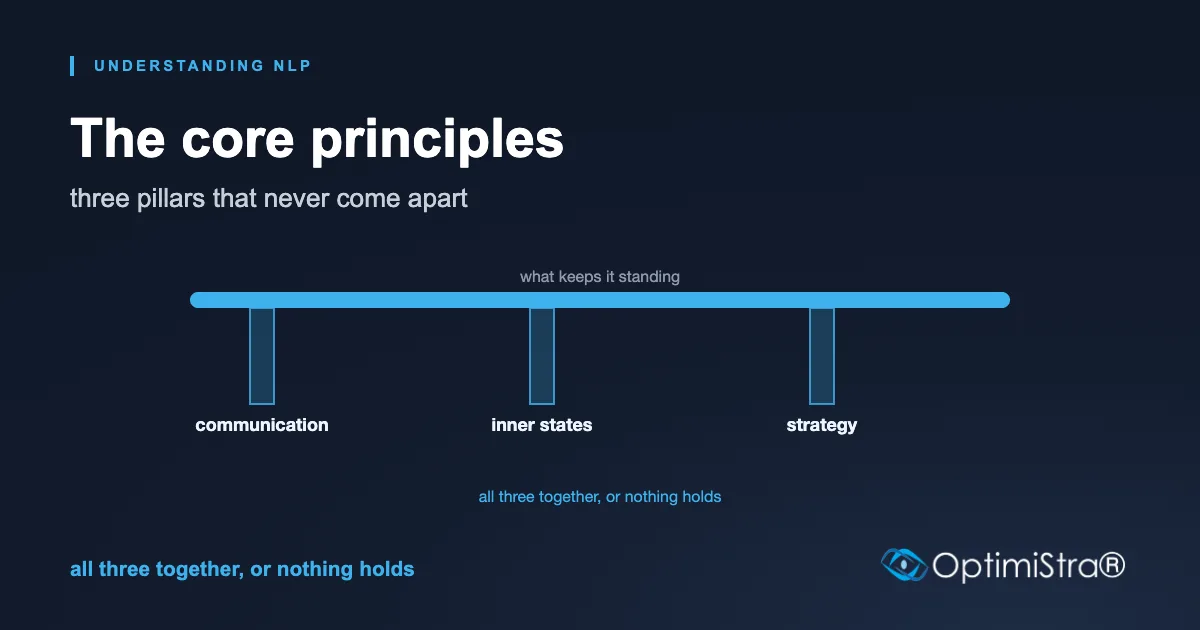
Neuro-Linguistic Programming (NLP) rests on three pillars: communication, including the conversation you hold with yourself; the management of inner states, with their chemical side; and strategies, which coordinate the other two. You can start with any one of them, but isolating a single pillar explains most of the changes that don’t last.
November 18, 2026 · 6 min read
Understanding NLP
How does NLP work?
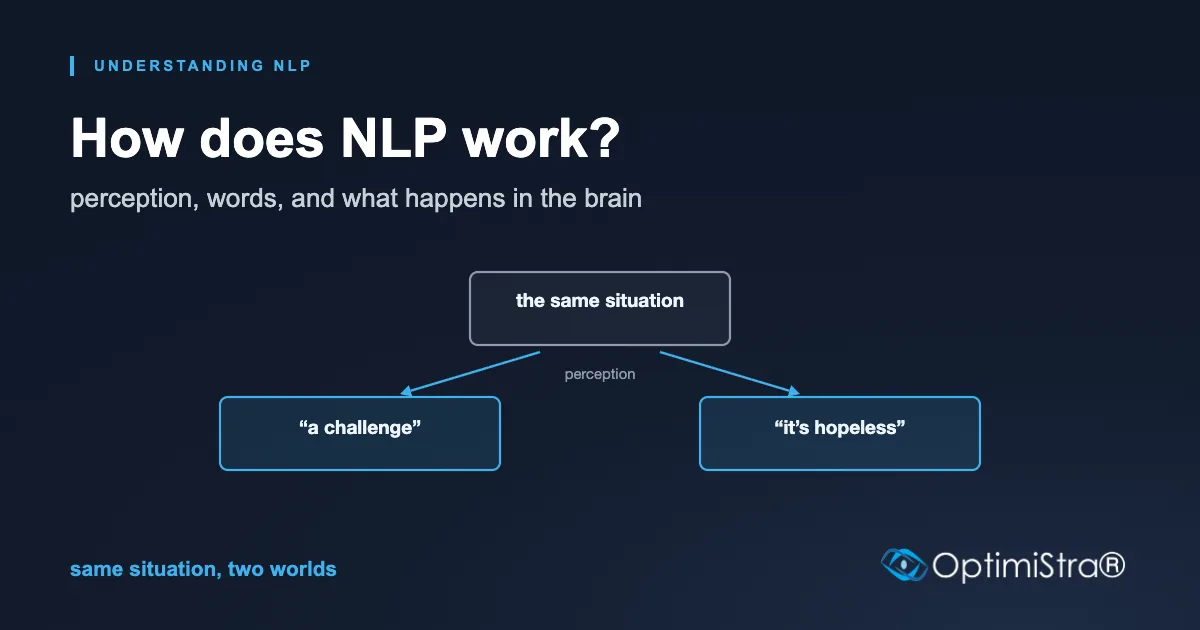
Neuro-Linguistic Programming (NLP) works on perception rather than on events: two people facing the same situation do not live in the same world. The words you say to yourself set up an inner state, and that state has measured effects on attention, decision-making and memory. There is nothing mysterious about it.
November 18, 2026 · 8 min read
Understanding NLP
What is NLP? (And why it isn’t what you think)
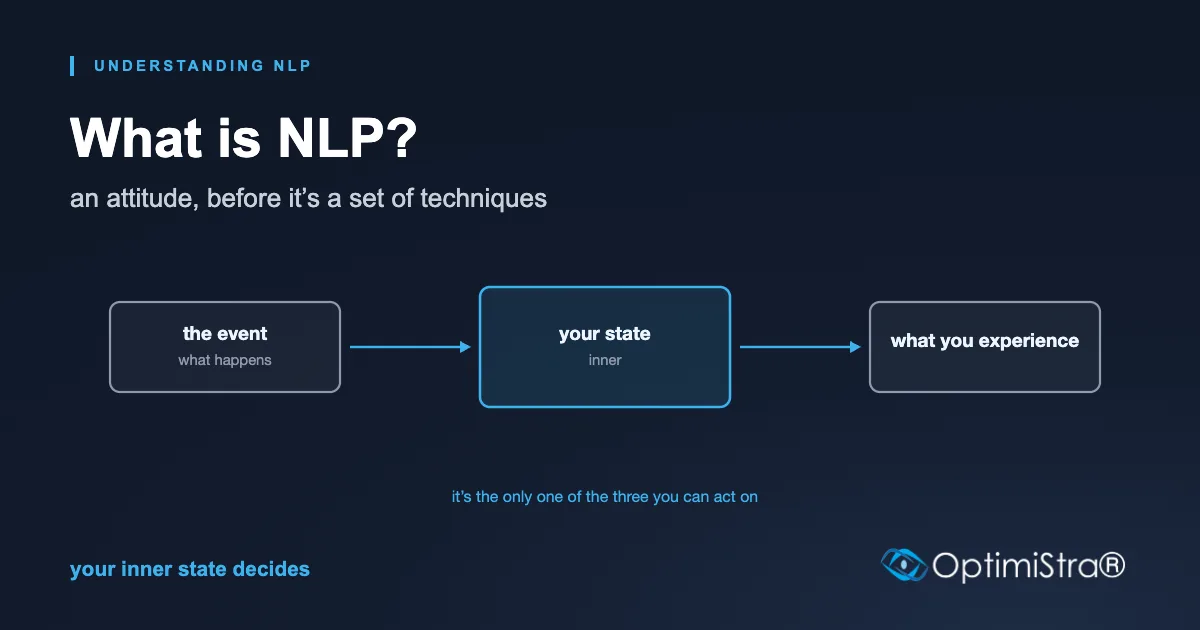
Neuro-Linguistic Programming (NLP) is passed on as an attitude, not as a catalog of techniques. It teaches you to notice the inner dialogue that runs all day, to recognize the automatic responses it sets up and to take charge of your inner state rather than being at its mercy day after day.
November 18, 2026 · 5 min read
Understanding NLP
Why is it called Neuro-Linguistic Programming?
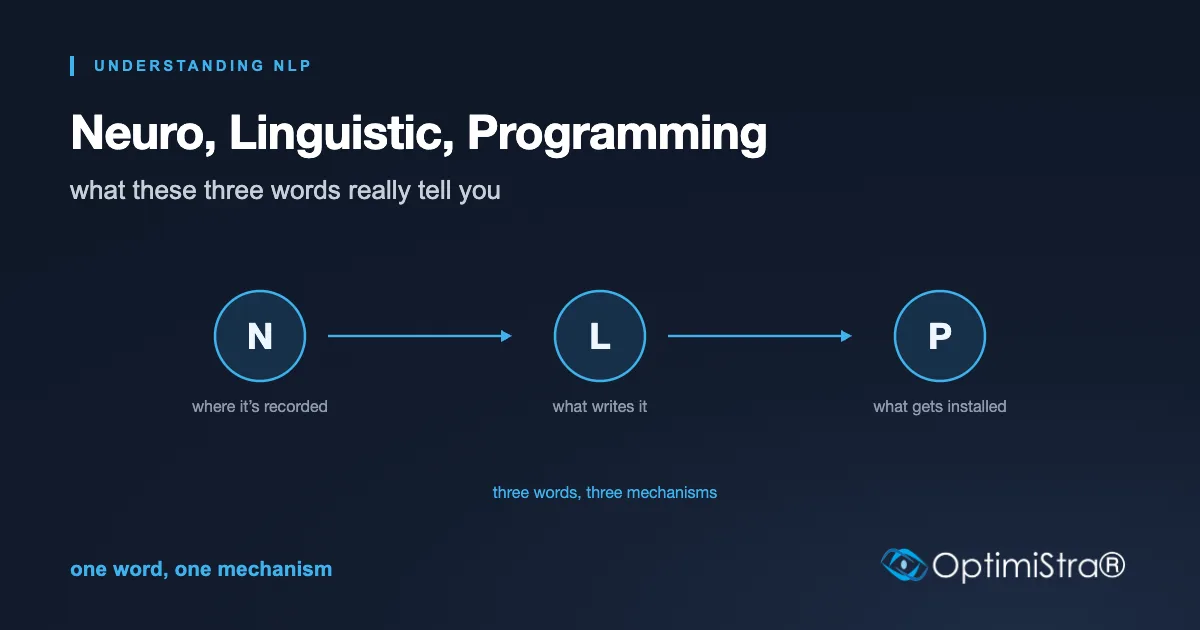
Neuro-Linguistic Programming (NLP) is named after three mechanisms. Programming, because experiences settle in us the way programs are installed. Neuro, because those programs live in neural connections that repetition strengthens. Linguistic, because language writes them and can rewrite them. The name is a map, and it shows where to look first.
November 18, 2026 · 7 min read