NLP: Straight Answers
These are the questions people prefer to avoid, and they are precisely the ones that deserve an answer: is NLP manipulation, a therapy, a science? What does it share with hypnosis? Where does it stop, and how do you recognise sound practice?
These articles answer without sparing the discipline, including where the research proves it wrong.
Featured
NLP: Straight Answers
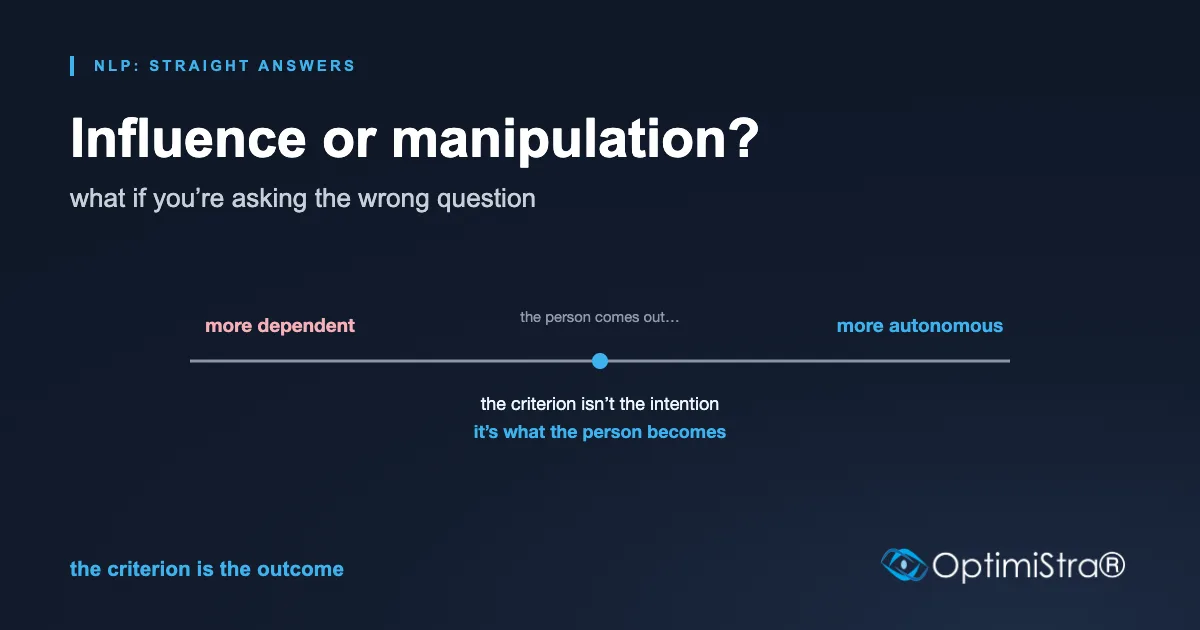
Influence or manipulation: are you asking the wrong question?
Framing the question in terms of intention leads to a dead end, because nobody describes themselves as a manipulator. The useful test is the result: does the other person come away more autonomous, or more dependent? That is a question you can check rather than simply assert.
November 18, 2026 · 7 min read
NLP: Straight Answers
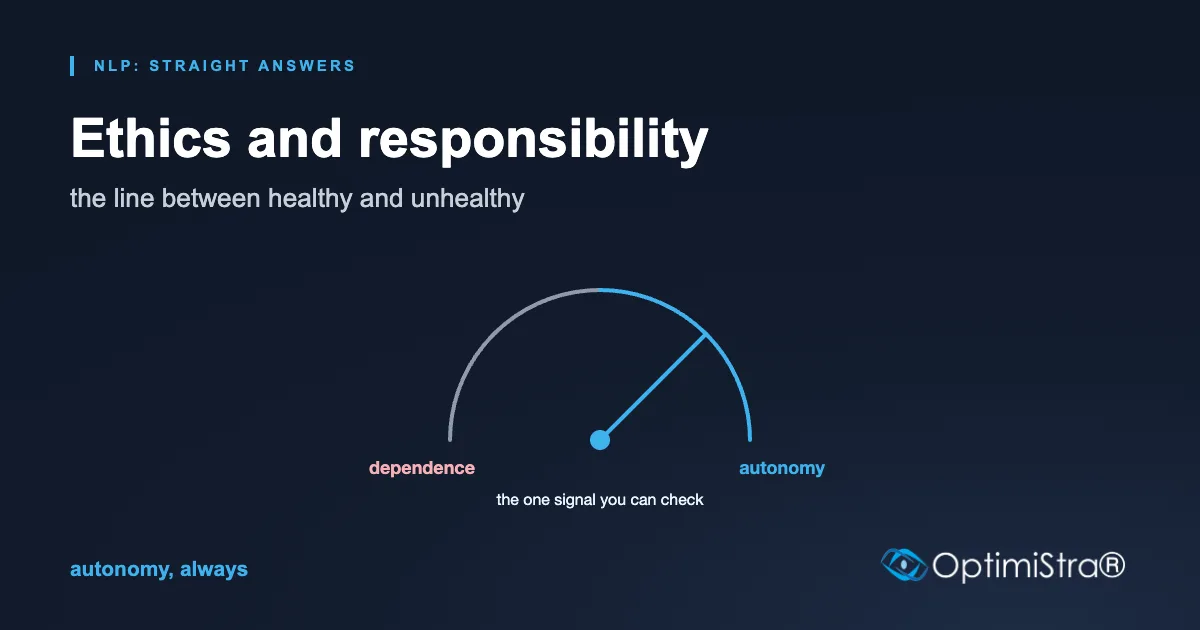
Ethics and responsibility in NLP: the one line between healthy and unhealthy practice
The most reliable signal of a healthy practice is autonomy. A practitioner who keeps adding sessions without ever making the person able to act alone should put you on your guard. And the practitioner is not responsible for the results: taking the credit for them is already the first step in the wrong direction.
November 18, 2026 · 5 min read
NLP: Straight Answers
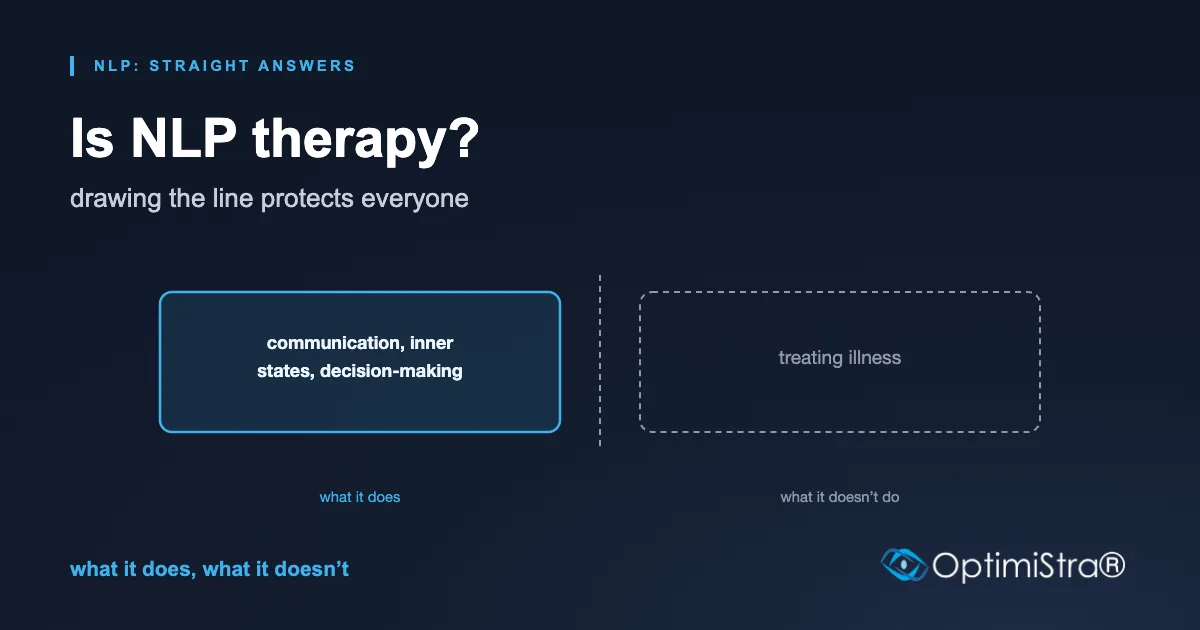
Is NLP therapy?
Neuro-Linguistic Programming (NLP) is not therapy and is no substitute for it. It works on communication, inner states and the way you make decisions, in the here and now, with no claim to treat anything. Stating that limit plainly, from the outset, protects people as much as it protects the discipline.
November 18, 2026 · 6 min read
Earlier articles
6 articles
NLP: Straight Answers
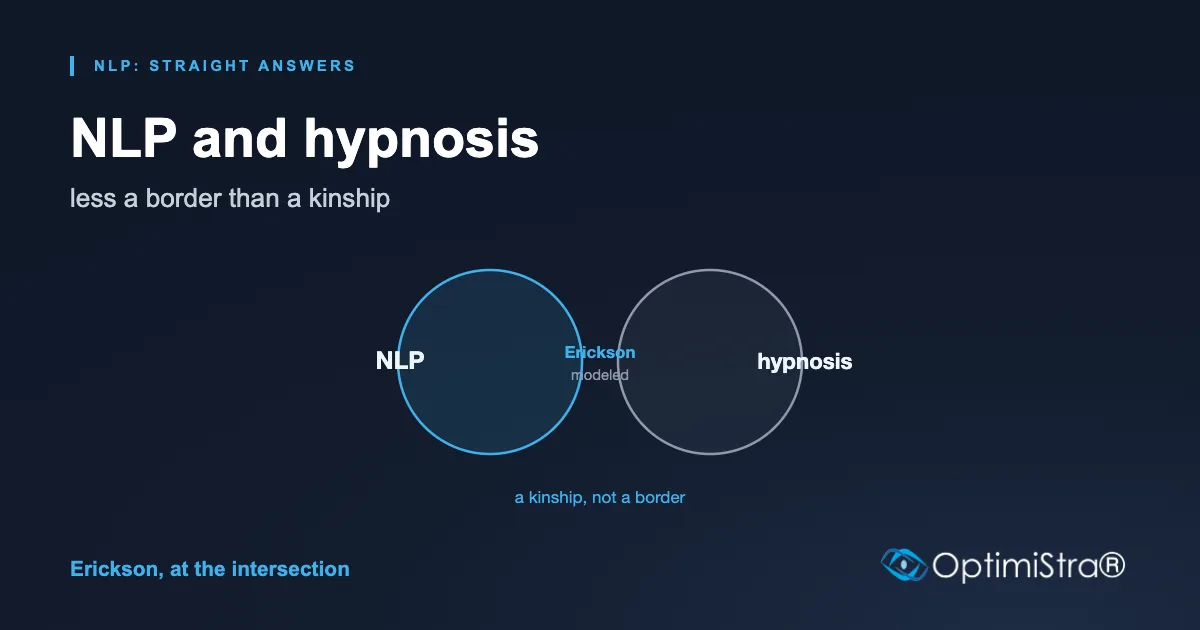
NLP vs hypnosis: what’s the difference?
Neuro-Linguistic Programming (NLP) and hypnosis share a root: NLP was built by modeling remarkable practitioners, among them Milton Erickson, the father of Ericksonian hypnosis. The version taught in the French-speaking world has often cut that root, which leaves an NLP shorter than the original and markedly less effective.
November 18, 2026 · 5 min read
NLP: Straight Answers
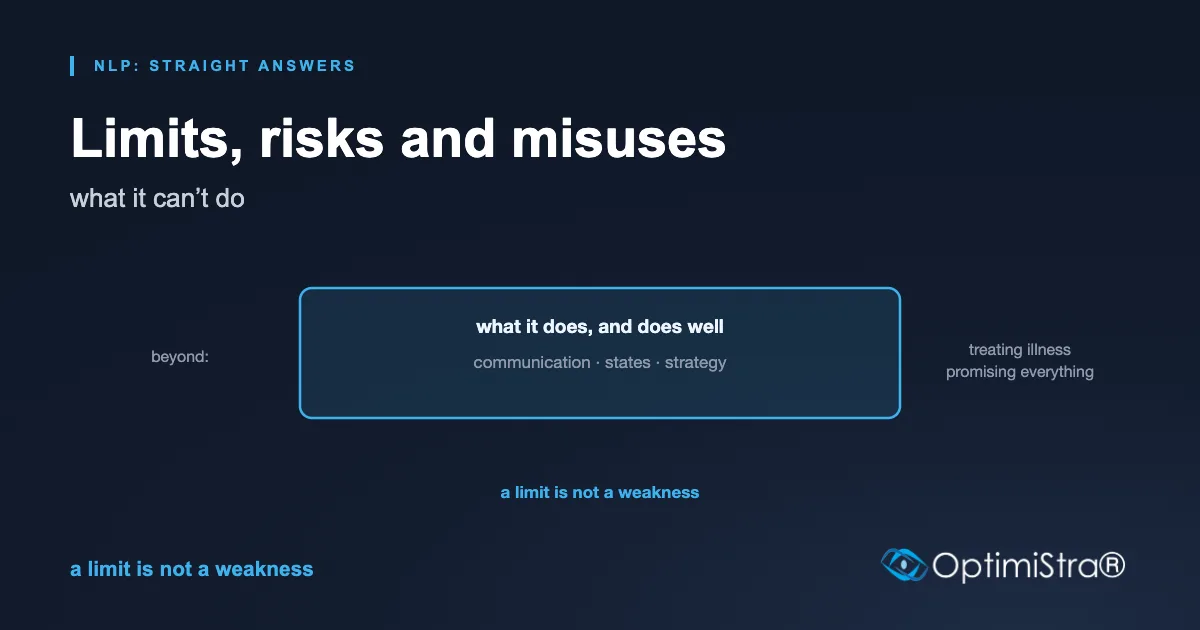
The limits, risks and misuses of NLP
Neuro-Linguistic Programming (NLP) is not a panacea, and its limits are not a weakness: they are what makes it usable. Some claims attributed to NLP have been tested and do not hold up. Detecting lies from eye movements is the best-documented example.
November 18, 2026 · 6 min read
NLP: Straight Answers
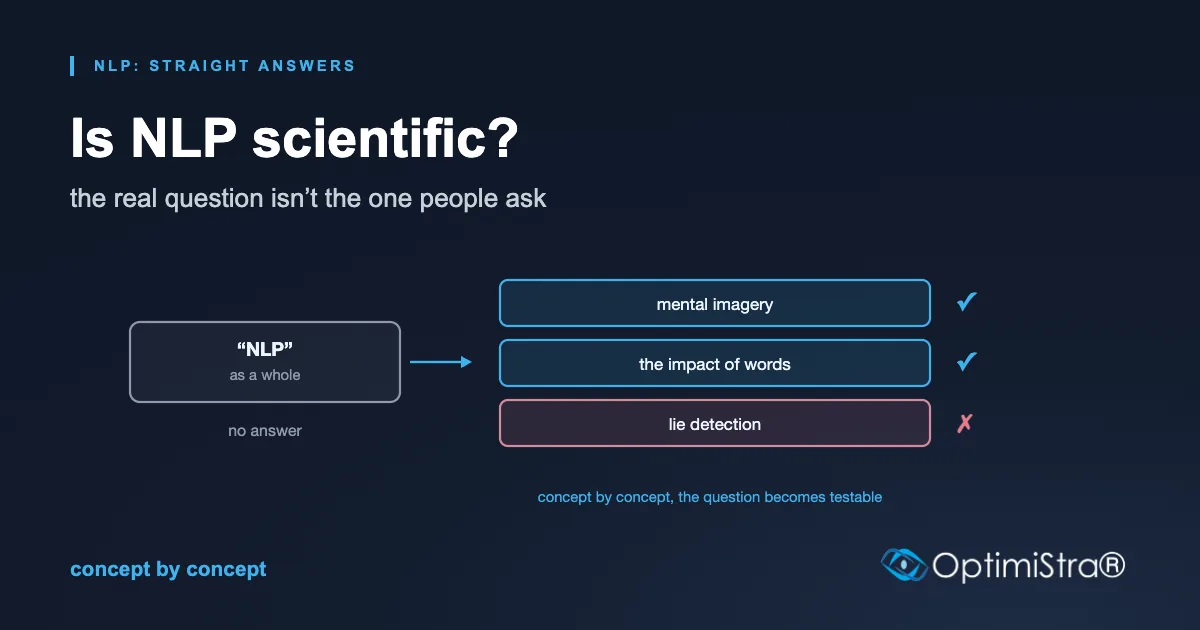
Is NLP scientific? The real question isn’t the one you think it is
Neuro-Linguistic Programming (NLP) cannot be validated as a block, because it is an assembly of separate concepts and not a single theory. The most critical review says so itself: the scarcity of evidence reflects how few and how weak the studies are, not proof that it does not work. Taken concept by concept, the answer can be checked.
November 18, 2026 · 12 min read