Stress and Emotions
Understand what happens in the body, and take back control of your state.
Featured
Stress and Emotions
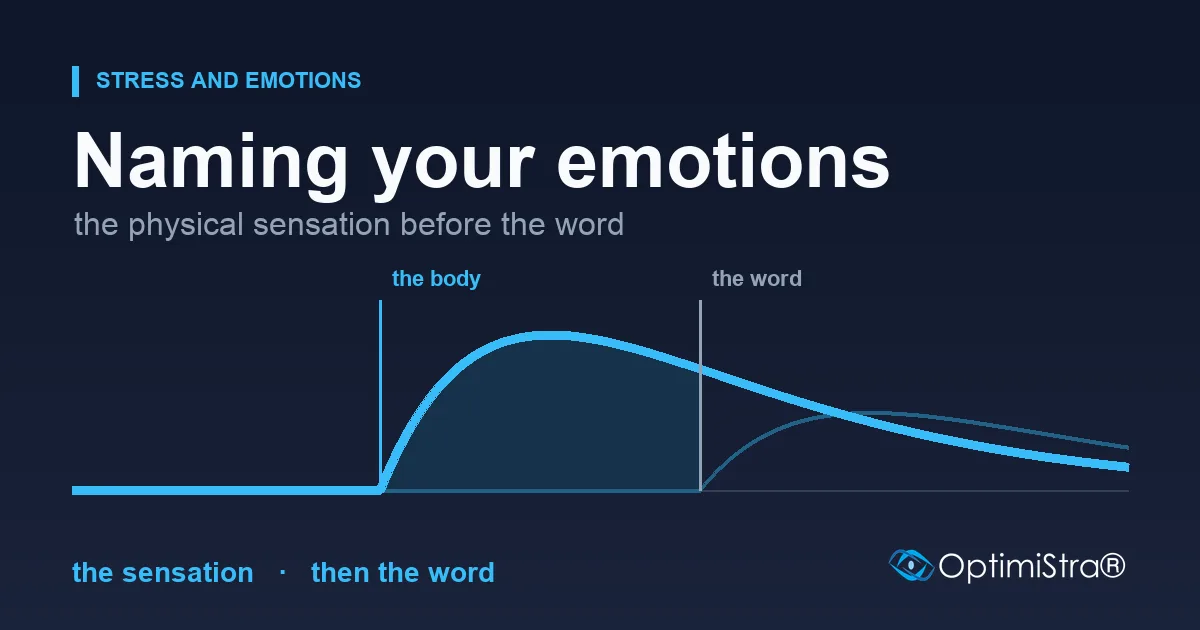
An emotion starts in the body: naming the sensation before the emotion
An emotion is a physical reaction set off by how you interpret an event, not by the event itself. The body moves first and the word comes later. Naming the sensation before the emotion takes 10 seconds. Here is what the research establishes, and the three precise points where it stops.
November 18, 2026 · 8 min read
Stress and Emotions
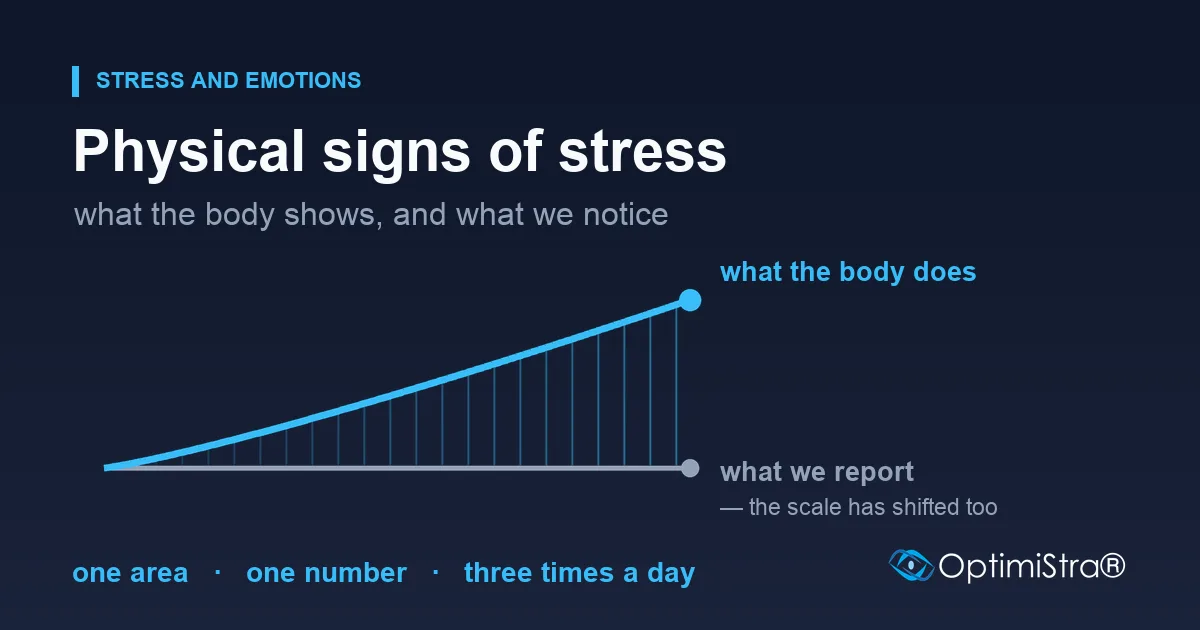
Physical signs of stress: what the body shows, and how much of it we notice
Under stress, the jaw muscles work harder: 38 studies show it. Yet what people report about their own tension from memory has almost nothing to do with what they notice when asked in the moment. And their point of comparison shifts along with them.
November 18, 2026 · 9 min read
Stress and Emotions
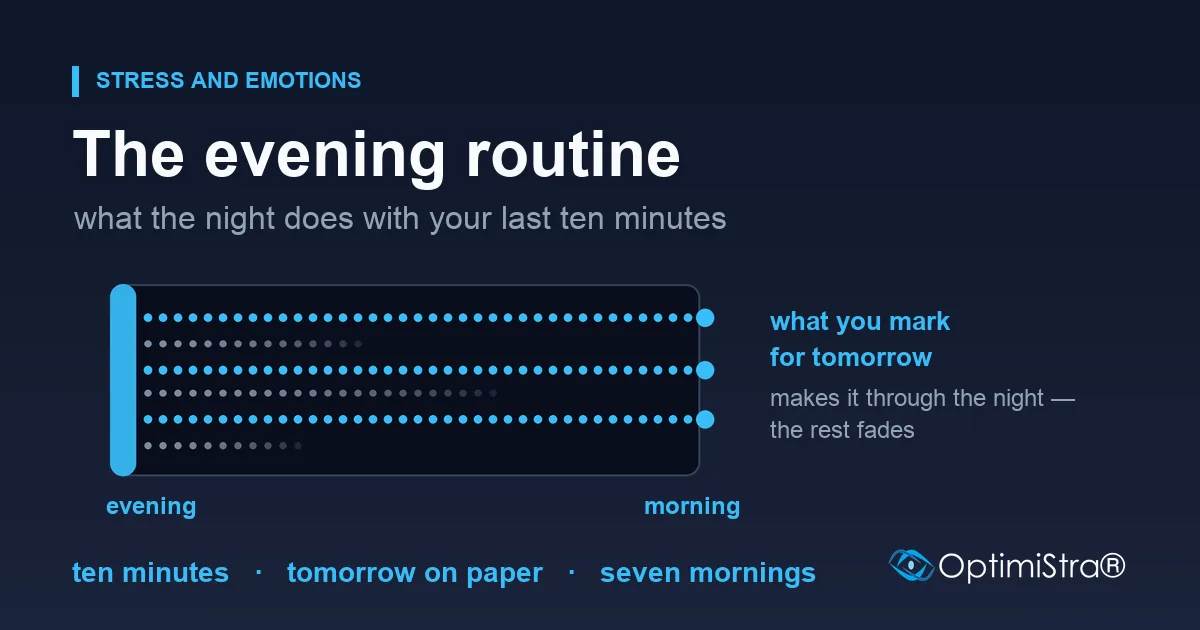
Evening routine: what the night does with your last 10 minutes
During sleep, the brain replays and consolidates what the day left behind, and it is selective: what has been marked as useful for tomorrow gets through, the rest far less. The best-measured evening habit is not positive thinking. It is writing tomorrow’s to-do list, in detail.
November 18, 2026 · 10 min read
Earlier articles
11 articles
Stress and Emotions
Reliving a happy memory from the inside: what it does, and what we know
Reliving a happy memory from the inside means going back into it through your own eyes, with its sounds and sensations. In the lab, recalling positive memories after a brief stressor limited the rise in cortisol, and thinking in images does more than thinking in words. The effect is modest and no substitute for care.
November 18, 2026 · 5 min read
Stress and Emotions
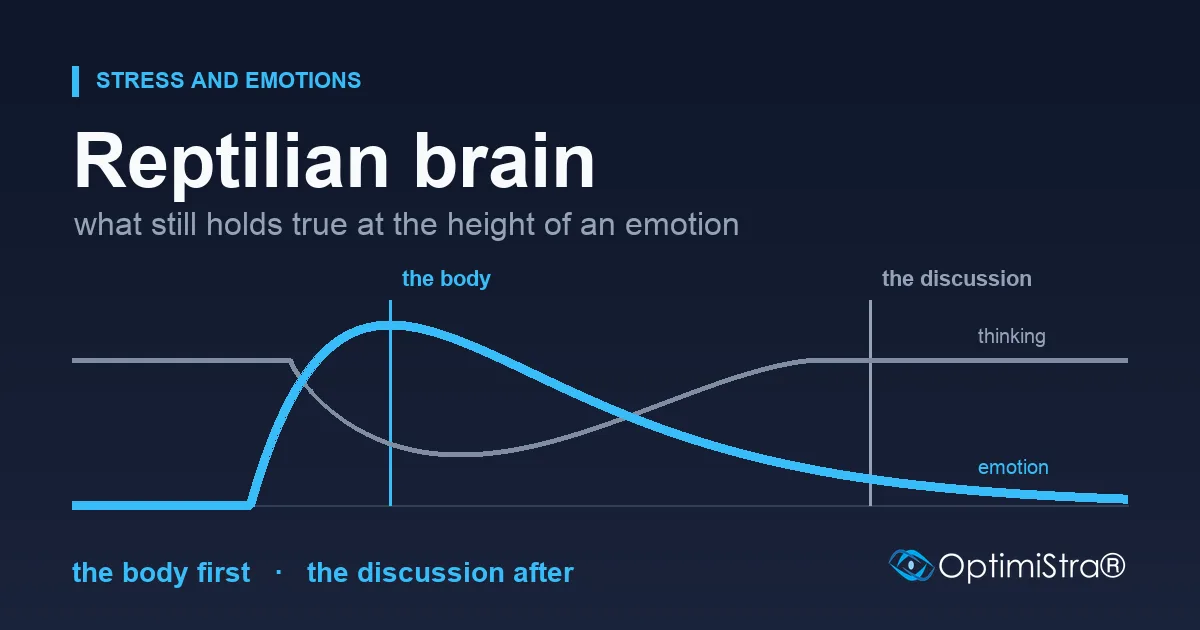
Reptilian brain: why we stop thinking clearly in the grip of emotion
At the peak of an emotion, the prefrontal cortex loses some of its capacity while fast reactions take over. The “reptilian brain” said to explain this is an abandoned model; the shift itself is well measured. Hence a simple move: body first, discussion afterward. Here are the studies, and their limits.
November 18, 2026 · 9 min read
Stress and Emotions
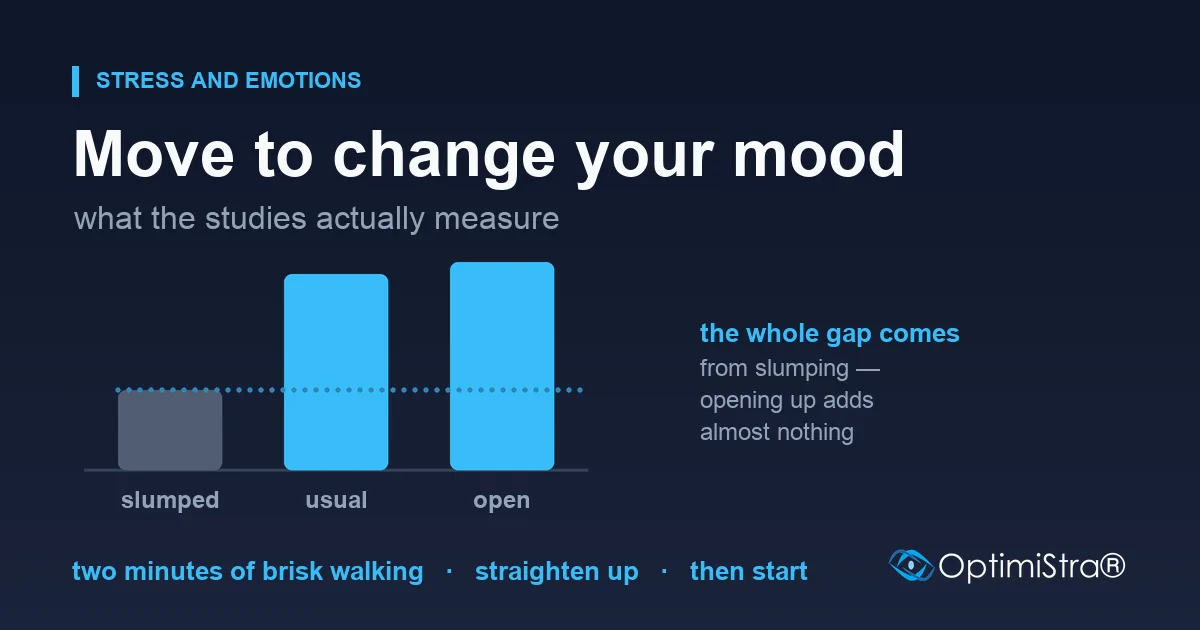
How movement changes your mood: what the studies actually measure
Five minutes of moderate walking is enough to improve self-reported mood, and six 5-minute breaks do more across a day than a single 30-minute block. On posture, a synthesis of 73 experiments gives an unexpected result: the cost comes from the contracted position, and an open position adds almost nothing.
November 18, 2026 · 10 min read
Stress and Emotions
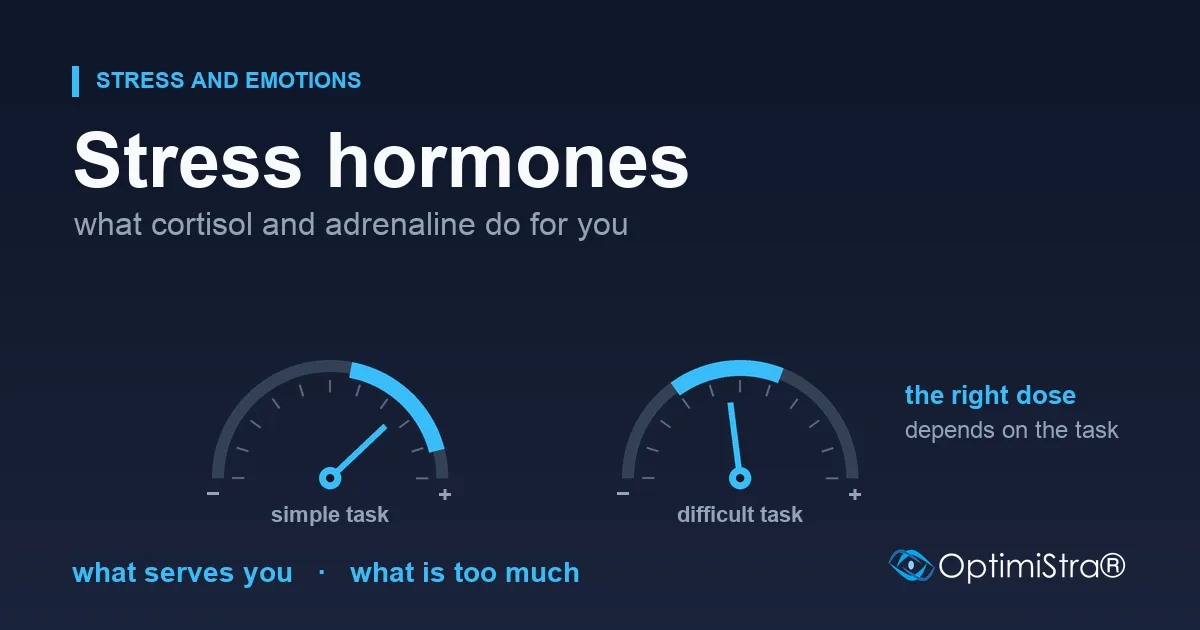
Stress hormones: what cortisol and adrenaline do for you
Cortisol and adrenaline are essential. Adrenaline readies the body to act within seconds, cortisol helps it allocate energy, and both help you retain the moments that matter. Their effect depends on the dose and on how difficult the task is. This article sets out what the studies show, and where their limits lie.
November 18, 2026 · 9 min read
Stress and Emotions
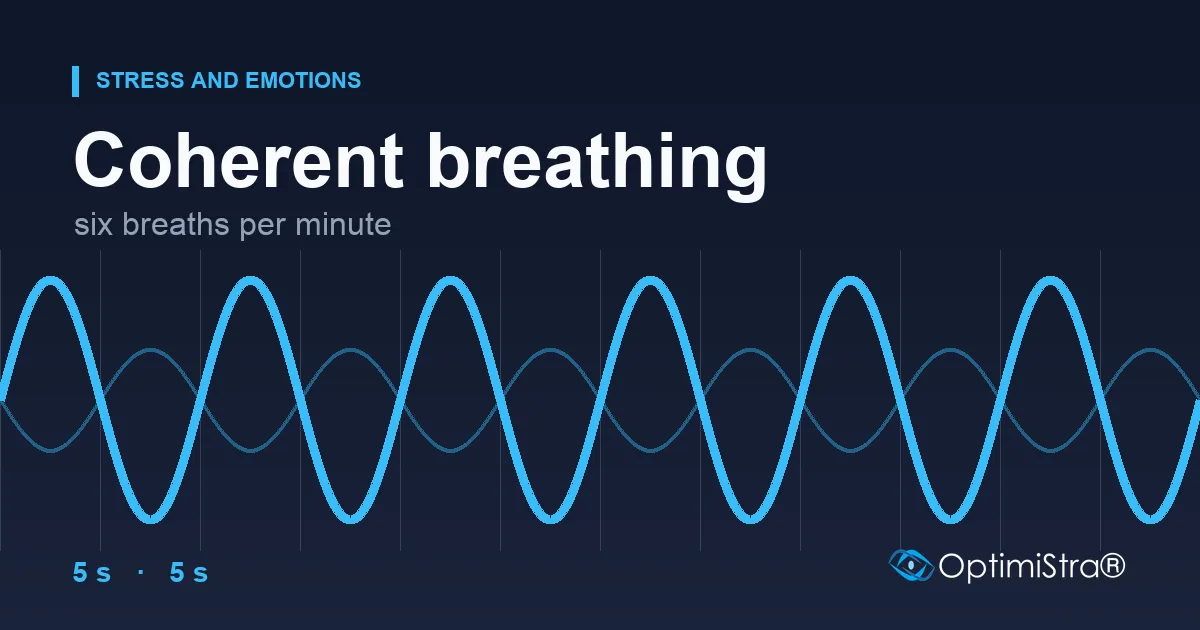
Coherent breathing: why 5 seconds, and not 4
Coherent breathing comes down to one instruction: breathe in for 5 seconds, out for 5, for 5 minutes, three times a day. The rhythm is not arbitrary. At six breaths a minute, two regulating mechanisms fall into phase and amplify each other. Here is what the research establishes, and where it stops.
November 18, 2026 · 6 min read
Stress and Emotions
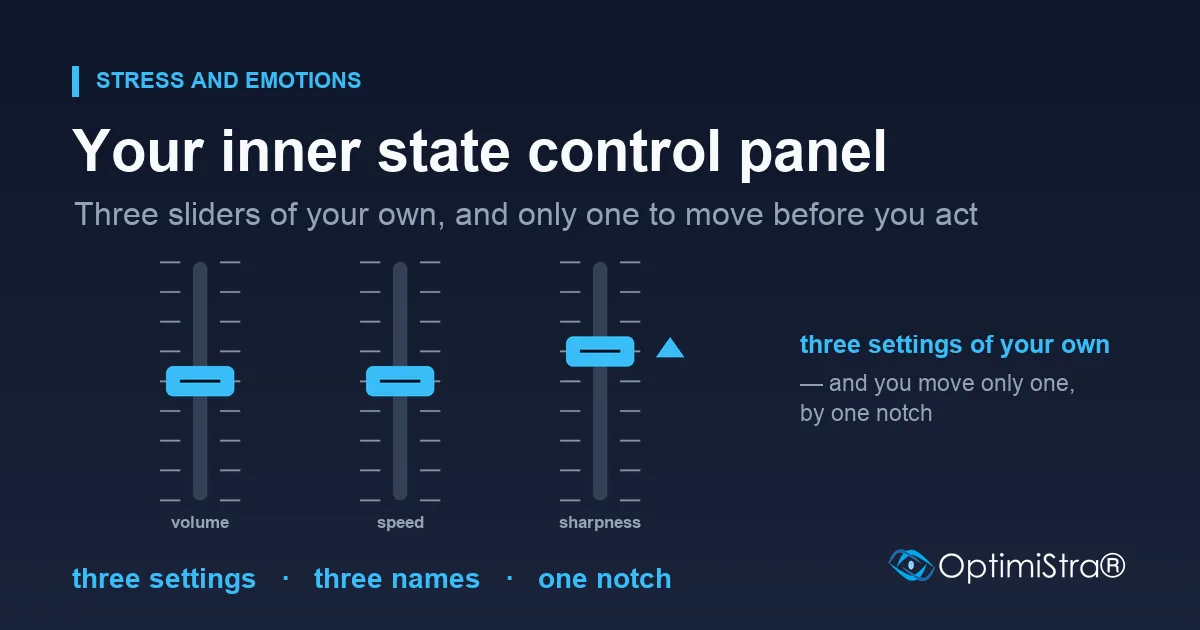
The control panel: three sliders for adjusting your inner state
The control panel is an NLP tool: an imaginary interface, like a mixing board, where you set three controls for your own state, name them, and move one a single notch before a task. The tool itself has not been tested as such, but the sense of being in control and the perception of time have been studied.
November 18, 2026 · 5 min read
Stress and Emotions
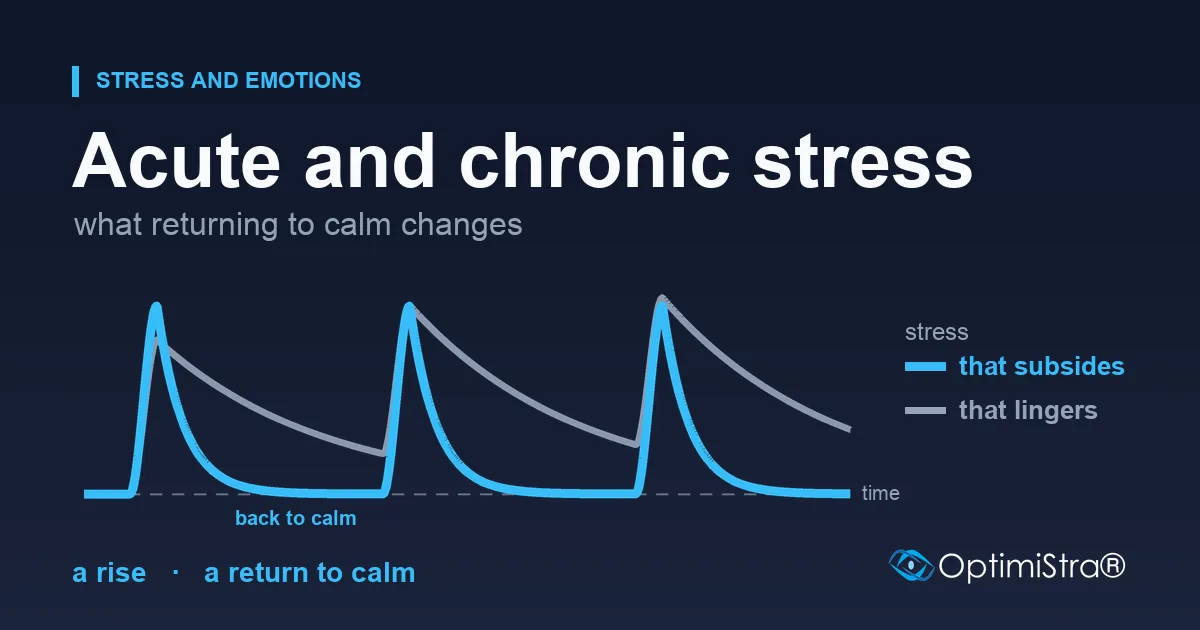
Acute and chronic stress: what returning to calm changes
Acute stress rises, then subsides: it is the response the body is built for. Chronic stress keeps the body mobilized without leaving it time to return to calm, and that missing recovery is what wears it down. Here is what the studies show, what they leave open, and an exercise for the week.
November 18, 2026 · 9 min read
Stress and Emotions
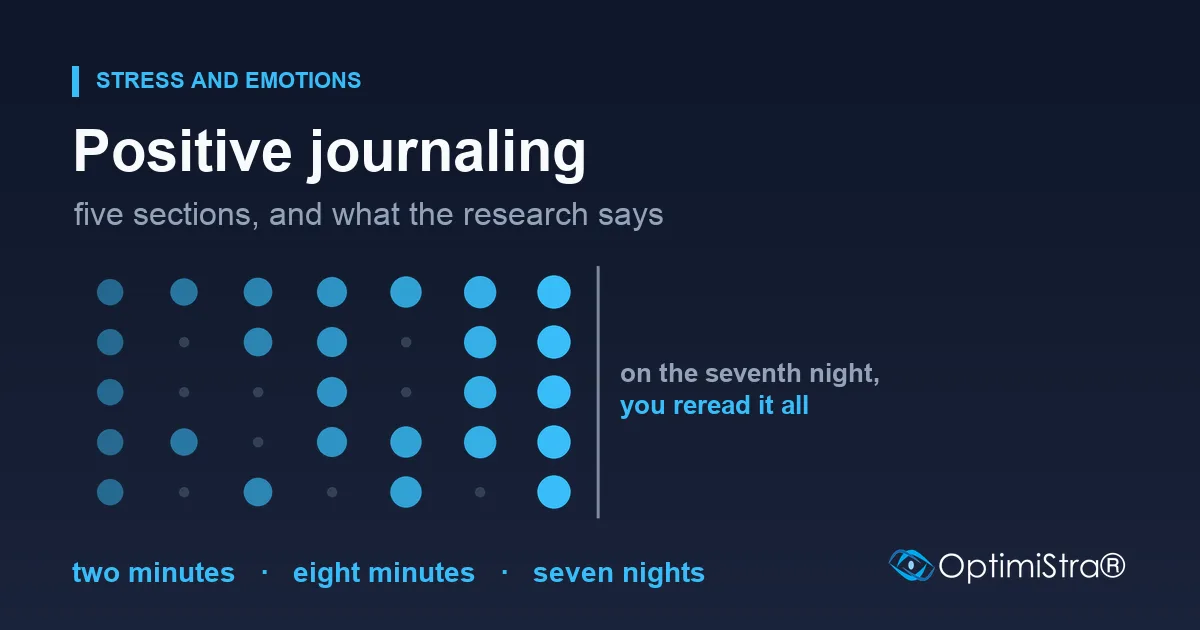
Positive journaling: five sections, and what the research says
Writing down what you are grateful for helps a little, and no more than any other positive activity. Two findings change how to keep a journal: recount a good moment instead of analyzing it, and write only positive affirmations you can believe. That is the case for five sections instead of one.
November 18, 2026 · 7 min read