Beliefs and Change
What holds us back, what shifts, and what takes more than good intentions.
Featured
Beliefs and Change
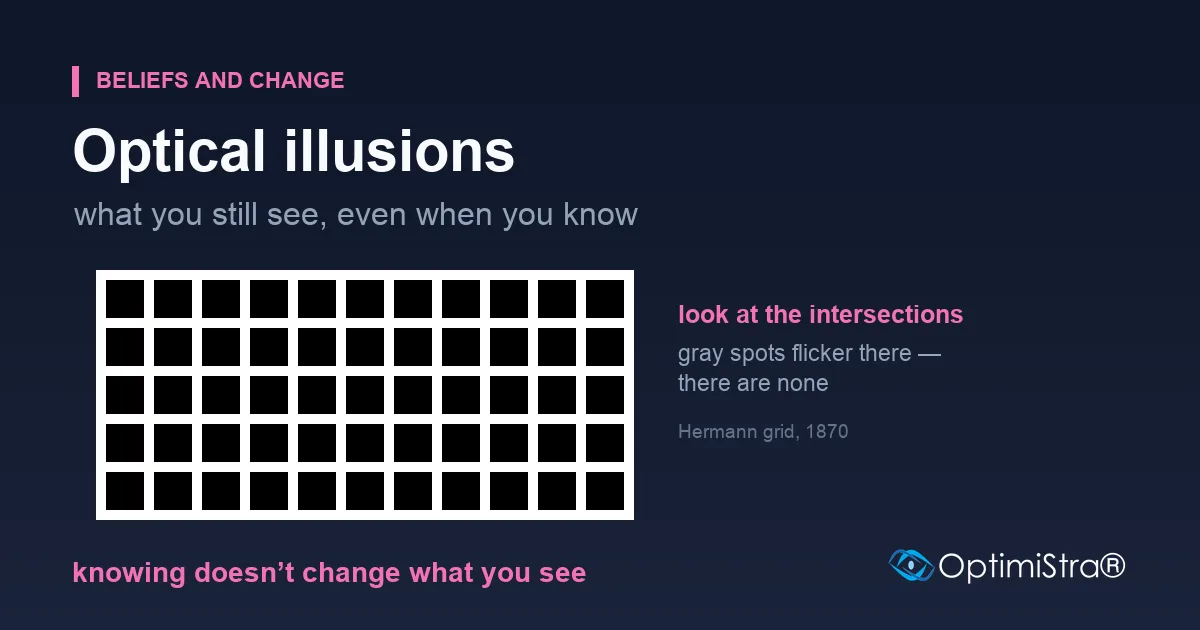
Optical illusions: what your brain still sees, even when you know better
An optical illusion isn’t a malfunction: it is the brain interpreting what it sees, correcting for shadows or filling in what’s missing. The most striking part is that the illusion holds even once you know how it works. Three famous illusions show this, and research explains why.
November 18, 2026 · 8 min read
Beliefs and Change
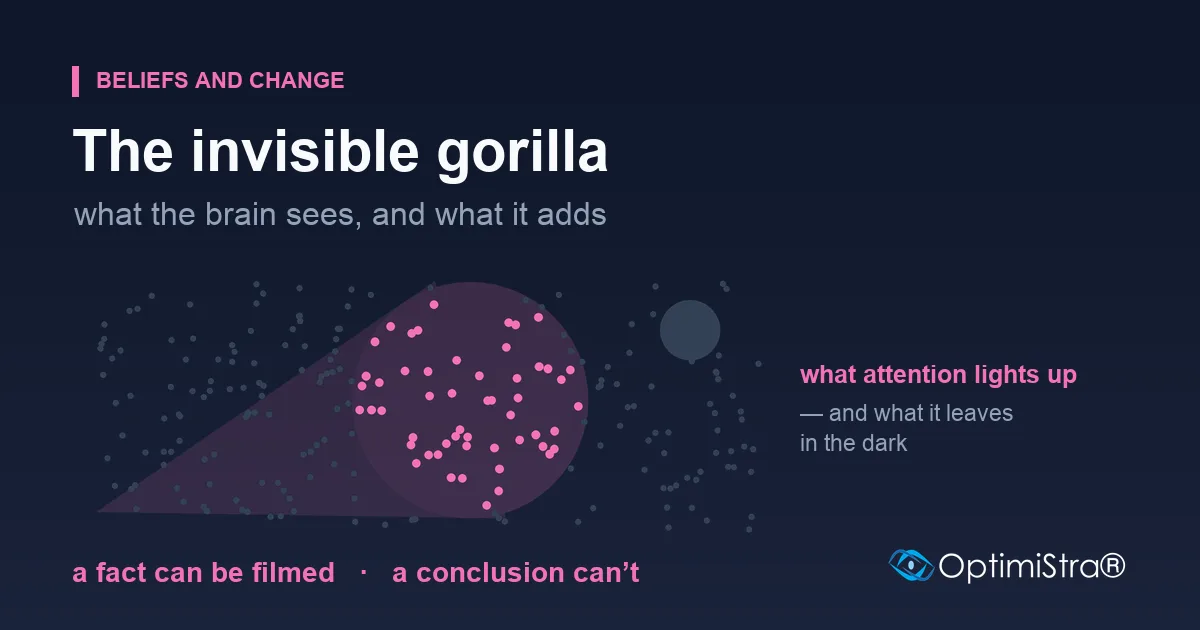
The invisible gorilla: what the brain sees, and what it adds
Attention works like a flashlight: it lights one spot at a time, and you can miss a gorilla while looking straight at it. Whatever it does light, the brain fills in with interpretations it never announces. You can observe both in yourself in a few minutes.
November 18, 2026 · 6 min read
Beliefs and Change
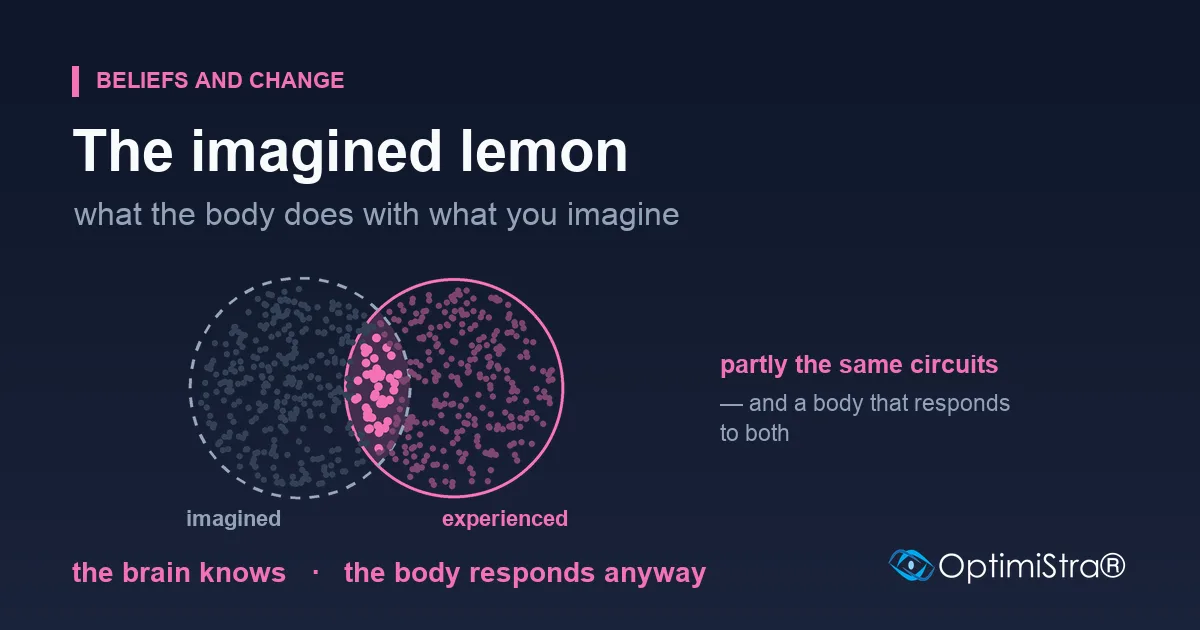
The imagined lemon: what your body does with what you imagine
Imagining a lemon makes you salivate, and imagining a movement activates some of the circuits that control it. Even so, the brain does not confuse real and imagined: it tells them apart, except when the inner image becomes strong enough. That is what makes mental rehearsal useful, to a modest degree.
November 18, 2026 · 8 min read
Earlier articles
10 articles
Beliefs and Change
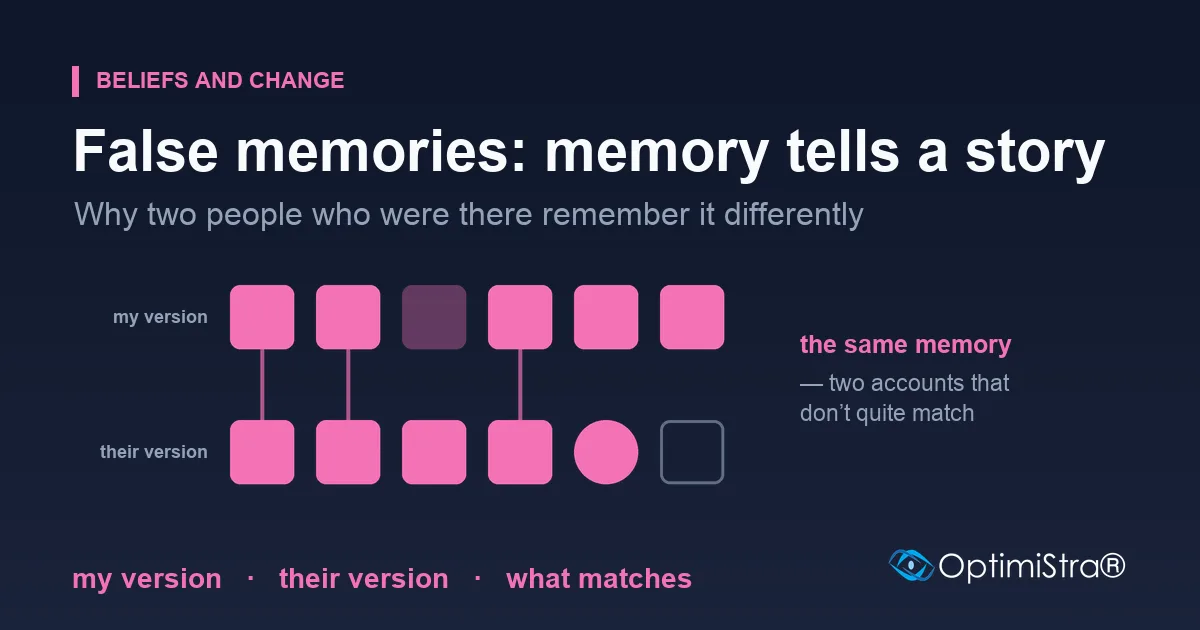
False memories: why we remember things that never happened
A false memory is one you’re sure of that didn’t happen the way you believe, in part or sometimes entirely. Studies show that a photo, a word, or a conversation is enough to alter an ordinary memory, and that confidence doesn’t guarantee accuracy. False memories are rarely false all the way through.
November 18, 2026 · 6 min read
Beliefs and Change
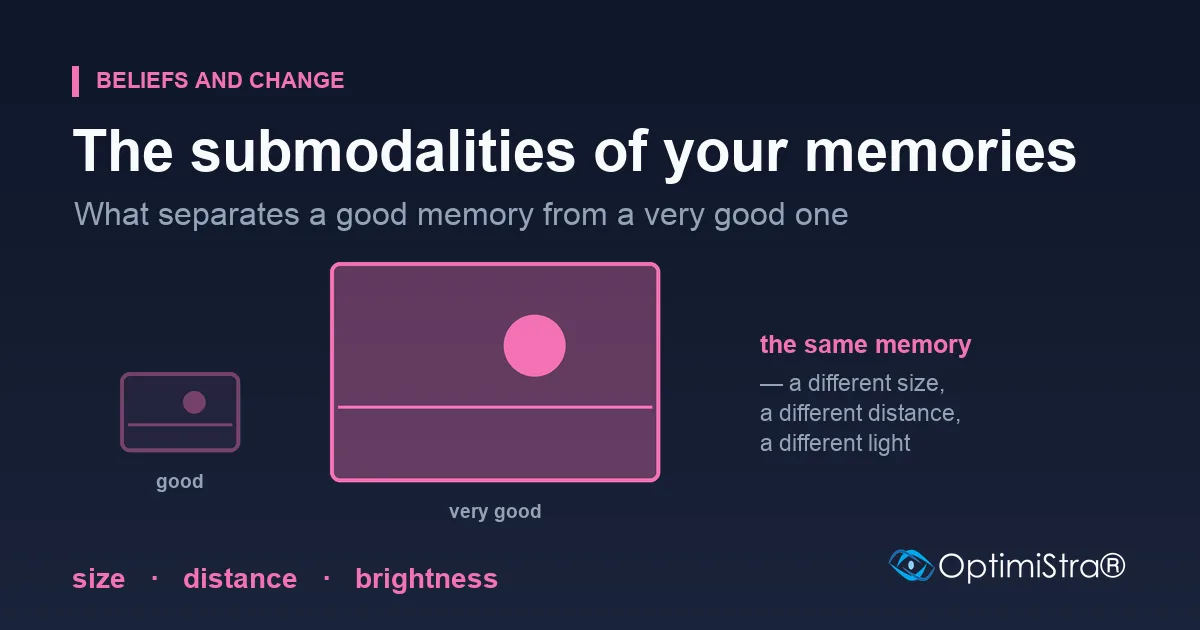
Submodalities: what separates a good memory from a very good one
Submodalities are the fine qualities of a mental representation: the size, distance, and brightness of an image, the volume of a sound, the warmth of a sensation. Studies show that the intensity of a memory goes hand in hand with its vividness, though the notion itself has never been tested as such.
November 18, 2026 · 5 min read
Beliefs and Change
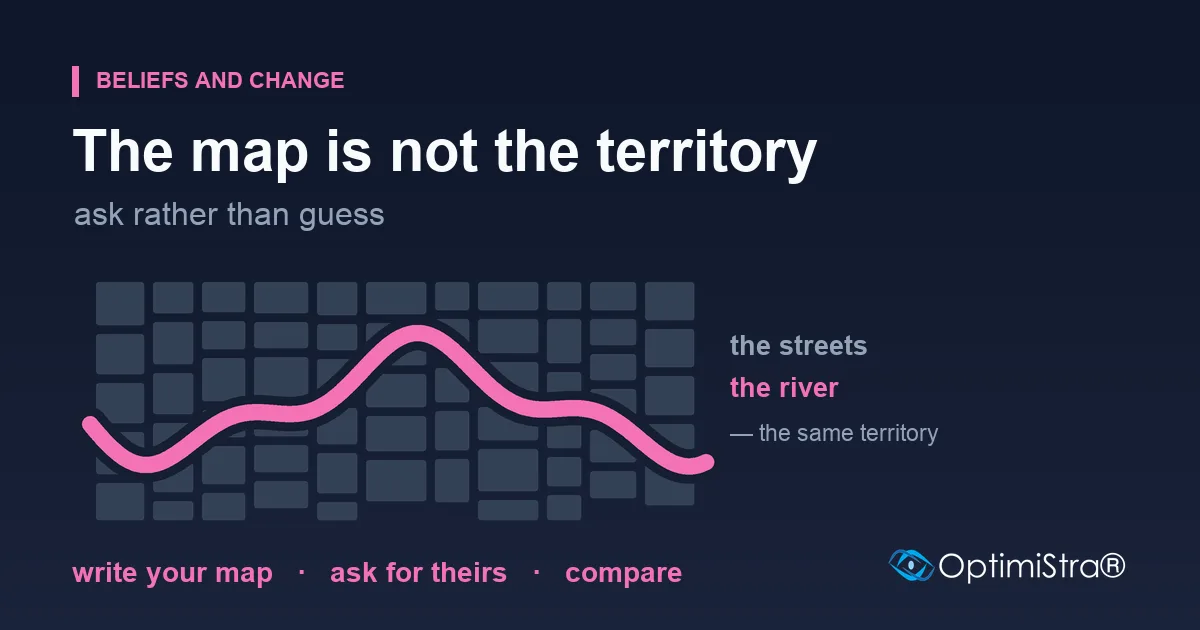
The map is not the territory: ask rather than guess
Everyone perceives the same reality through a map of their own, and two different maps can both be accurate. The trap is believing you see things as they are and attributing the disagreement to the other person. Imagining their point of view does not make you more accurate; asking them for it does.
November 18, 2026 · 6 min read
Beliefs and Change
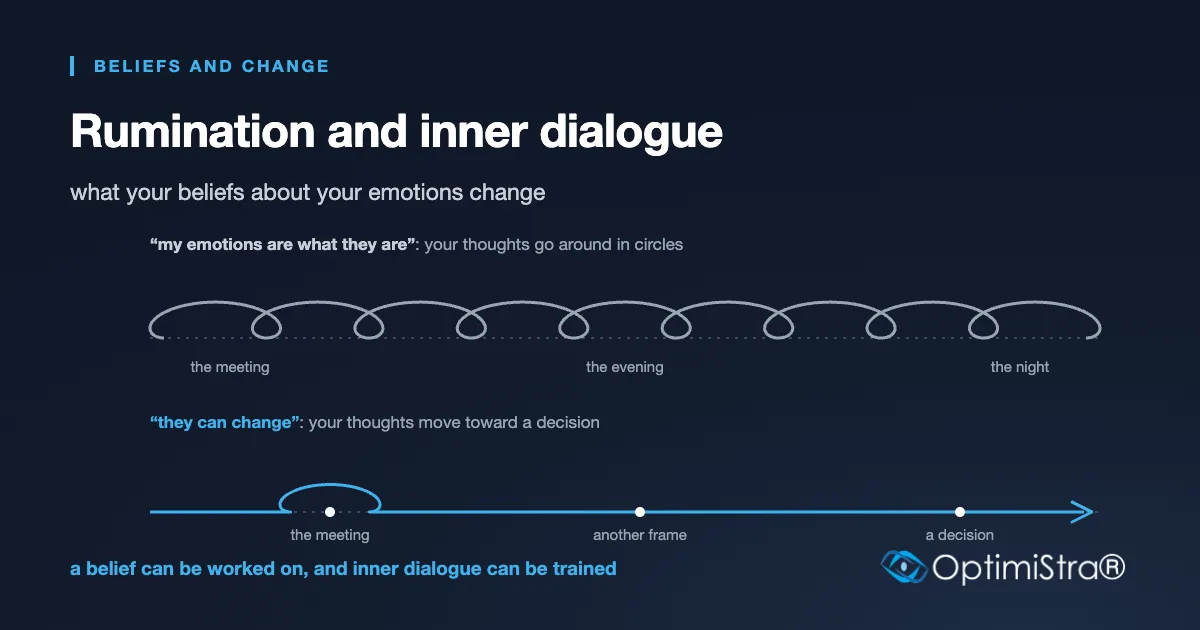
Rumination and inner dialogue: what your beliefs about your emotions change
Rumination, the inner dialogue that replays what went wrong on a loop, leaves you tired and costs you sleep and effectiveness at work. A Yale study of 3,282 professionals suggests it depends in part on one belief: that your emotions can change. That belief can be worked on, and inner dialogue can be trained.
November 18, 2026 · 14 min read
Beliefs and Change
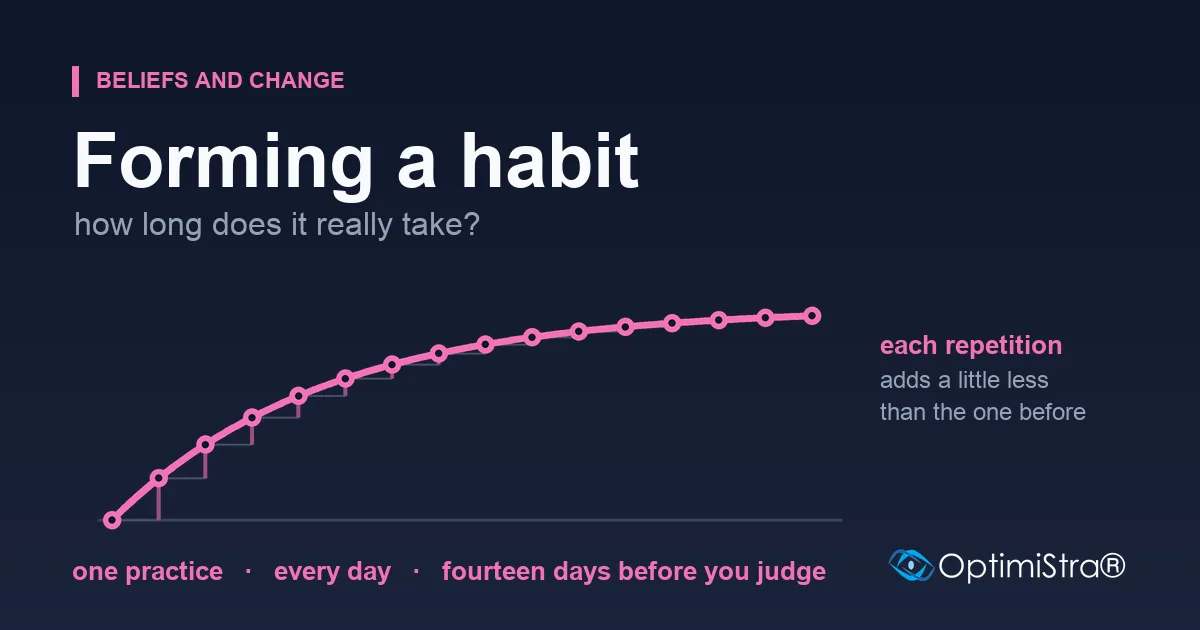
How long does it really take to form a habit?
Repeating what you learn changes the connections between neurons, as Eric Kandel showed. In people, an action repeated every day takes a median of 66 days to approach its highest level of automaticity, with a range of 18 to 254 days. The 21-day rule does not hold up, and one missed day does no harm.
November 18, 2026 · 8 min read
Beliefs and Change
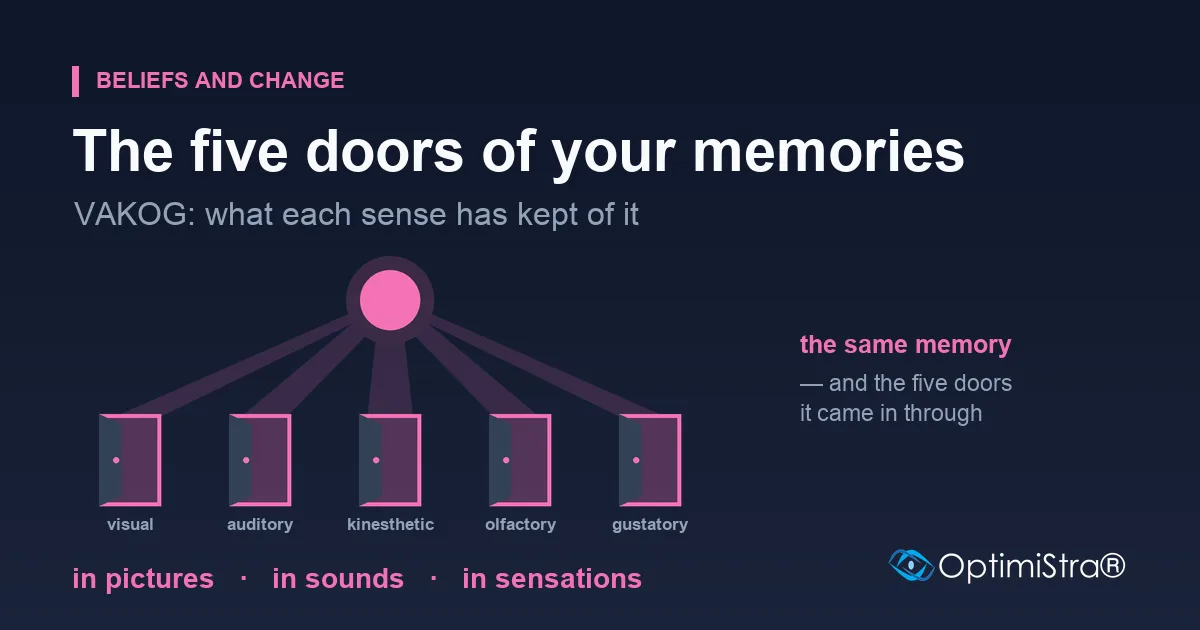
VAKOG: the five senses of your memories, and what we really know about them
VAKOG stands for the five senses through which we live and recall an experience: visual, auditory, kinesthetic (the body and emotions), olfactory, and gustatory. Imagining draws partly on the same brain regions as perceiving, and each person does it differently. The idea of a dominant channel, however, has not been confirmed by research.
November 18, 2026 · 7 min read
Beliefs and Change
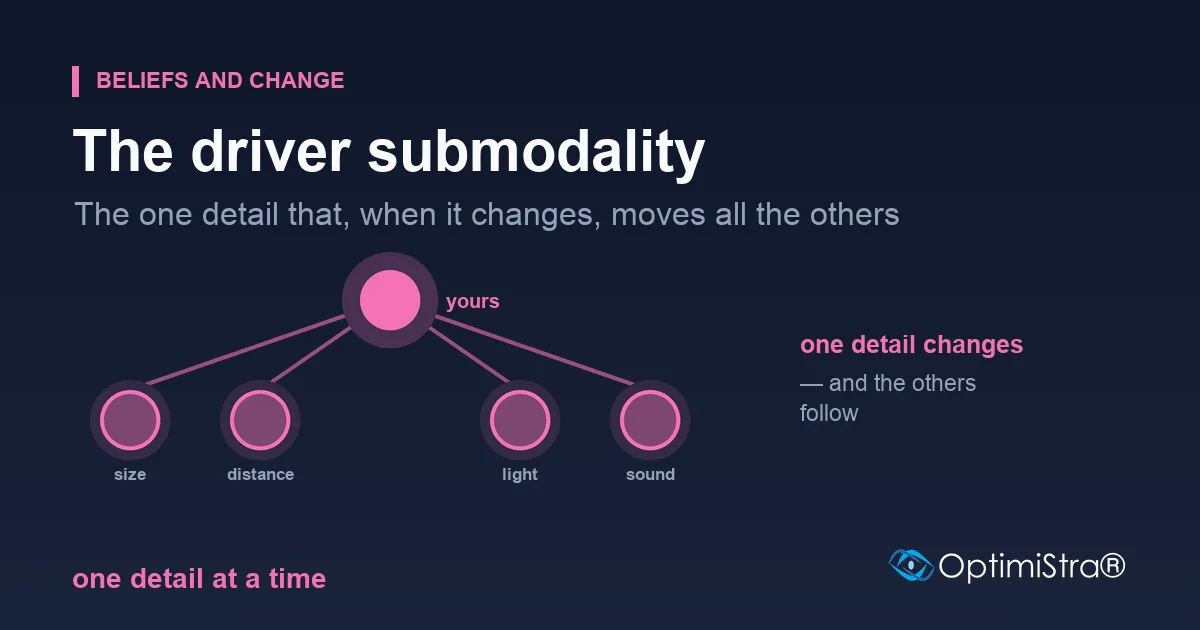
The driver submodality: the one detail that moves all the others
In NLP, the driver submodality is the quality of a mental image that carries the others with it when you change it: size, distance, brightness, or color, depending on the person. Studies show that a single visual detail can change what we feel, but none has tested this ripple effect.
November 18, 2026 · 5 min read